


Why is There an Air Gap in a Transformer’s Iron Core
Oct 23, 2025
Leave a message
A transformer core is a crucial component in electrical transformers, designed to facilitate the efficient transfer of electrical energy between two or more circuits through electromagnetic induction. Typically made from laminated sheets of ferrous metal, such as silicon steel, the core serves to channel and enhance the magnetic flux produced by the primary winding.
Why Do Transformer's Iron Core Need an Air Gap?
1.Preventing Core Saturation:
The air gap is critical for avoiding core saturation, especially in transformers that handle variable loads. By increasing reluctance in the magnetic path, the air gap regulates flux density and allows transformers to operate efficiently under demanding conditions.
2.Managing Impedance and Load Variability:
The air gap also influences impedance control within a transformer. This is particularly important for applications with fluctuating load demands, as controlled impedance helps protect components from damage and ensures consistent performance.
3.Improving Transformer Stability:
Adding an air gap enhances control over magnetic flux, resulting in more stable performance. For applications like power supplies, industrial control systems, and medical equipment, stability is paramount.
Industry Applications and Trends Influencing Air Gap Use in Transformers
The inclusion of an air gap in a transformer's iron core is not just a design choice; it is a critical factor that influences the performance, efficiency, and reliability of transformers across various applications. Here's a look at how air gaps are utilized in different industries and the trends shaping their use.
1.Industrial Control and Automation
In the realm of industrial control systems, transformers must handle complex load variations while maintaining stable performance. Air gaps have become standard in transformer designs to manage these challenges effectively. For instance, air-gapped transformers help prevent saturation during transient conditions, allowing for more reliable operation in automation applications. As industries increasingly adopt automation technologies, the demand for low-frequency transformers with customized air gaps is on the rise, ensuring reliability and efficiency.
2.Renewable Energy Systems
The push for renewable energy sources, such as solar and wind power, has led to increased use of transformers designed with air gaps. In renewable energy setups, transformers must manage intermittent load demands effectively. Air gaps allow these transformers to regulate energy storage and release, enhancing stability and preventing power loss. The trend towards greener technology means that manufacturers are focusing on optimizing air gap configurations to meet the evolving needs of renewable energy applications.
3.Medical Devices and Sensitive Equipment
In medical applications where precision is paramount, the design of transformers often incorporates air gaps to fine-tune impedance and prevent fluctuations that could compromise performance. The trend in this sector is moving toward more compact, efficient transformers with enhanced safety features-qualities that are prioritized in medical-grade devices. Air gaps play a crucial role in ensuring these transformers operate reliably under varying conditions while maintaining high levels of accuracy.
4.High-Frequency Applications
High-frequency transformers, such as those used in flyback converters, benefit significantly from the inclusion of air gaps. These gaps help prevent magnetic saturation and allow the transformer to store energy efficiently during operation. As electronic devices become smaller and more powerful, the demand for high-frequency transformers with optimized air gaps is increasing. This trend highlights the need for designs that can handle higher currents while minimizing losses associated with leakage inductance.
5.Miniaturization Trends
The ongoing trend toward miniaturization in electronics has led to a greater focus on transformer design that incorporates air gaps without compromising efficiency. As devices shrink in size, transformers must also become more compact while maintaining high performance levels. By refining air gap design, manufacturers can produce smaller transformers suitable for PCB mounting and portable devices, which is especially valuable as consumer electronics evolve.
Distribution Gap Core specification

|
Product name |
Distribution Transformer Core |
|
Input Voltage |
3kV, 6kV, 10kV, 35kV, 69kV, 110kV, 115kV, 132kV, 220kV, 400kV |
|
Output Voltage |
110V, 220V, 380V, 440V, 480V |
|
Core material |
CRGO Silicon Steel Core, Amorphous |
|
Capacity |
10KVA,15KVA,25KVA,37.5KVA,50KVA,75KVA,100KVA,125KVA,150KVA |
|
Frequency |
50Hz/60Hz |
GNEE Featured Products
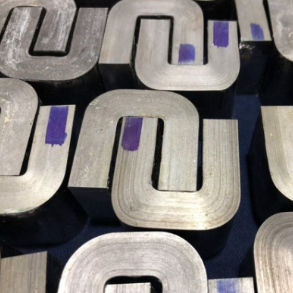
Gnee provides premium iron cores to the world. Our cores can be selected in a wide range of materials, shapes, applications, manufacturing techniques, etc., to meet customers' diverse demands. Explore our wide product range now~



Manufacturing Process

1. Raw Material Sourcing

2. Slitting

3. Punching

4. Laminating

5. Core Forming

6. testing
GNEE New Material
Founded in 2008 and located in Anyang in China, GNEE New Material is a high-tech enterprise specializing in researching and manufacturing iron core products.
The company currently occupies over 20,000 square meters and employs more than 200 people, including over 80 professionals. After more than 18 years of development, we have built our own magnetic material production base and independently develope, produce, and sell various kinds of iron cores. The common types include silicon steel cores, motor cores, transformer cores, toroidal iron cores, special-shaped cores, custom cores, and others. Our cores are widely applied in different sectors including transformers, motors, mutual inductors, voltage stabilizers, welding machines, magnetic amplifiers, and instrumentation, providing diverse core solutions to global customers.

30+
Types of Products
18k+
Happy Clients
Why Choose GNEE New Material?
GNEE New Material was founded in 2008, which is a National High-tech Enterprise & Famous Brand Enterprise in China, developing into a professional manufacturer and supplier of high-quality iron cores.
18+
Over 18 years of success in the iron core industry;
National High-tech Enterprise & Famous Brand Enterprises in China;
200+
Over 200 employees;
The R&D team has more than 80 experienced engineers and the production team has more than 100 skilled staffs;
35+
Annual turnover up to 35 million dollor per year;
Owns many sets of highly automatic winding, annealing, and assembling machines;
1,000+
Over 1000 customers in domestic and overseas markets;
core Products are exported to more than 70 countries in the world;
GNEE New Material Factory Overview


Meet Our Sales Manager
"The Core of the Iron Core, the Power of Leadership" - See Our Great Decision-Makers Deeply Engaged in the Magnetic Materials Industry.

Edison Zhang
CEO

Kelly Zhang
General Manager

Alex Cao
Sales Manager
Industries Served

Automobile Industry

New Energy


Transformer Applications

Our Mission
Strive To Create world-class Iron core brand
With 18 Years of industry experience, we focus on the research, development, and manufacturing of high-quality iron cores for electricity, industrial control, new energy, and automotive markets