


in one-stop service
GNEE Transformer products have passed SGS, intertek, CCC, CE and other international certifications. Noise, easy installation, energy saving and emission reduction, long service life, etc. The product production cycle is short, easy to install, and fast delivery. At present, the company has three factories.Our team is composed of very professional engineers. We strive to deliver you on time within the budget Power equipment, and provide excellent product quality. Provide you with the ultimate experience.
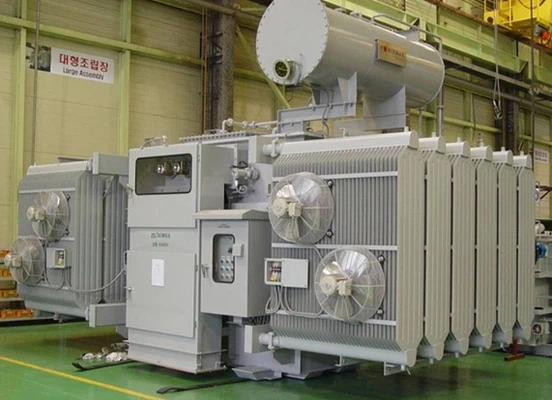
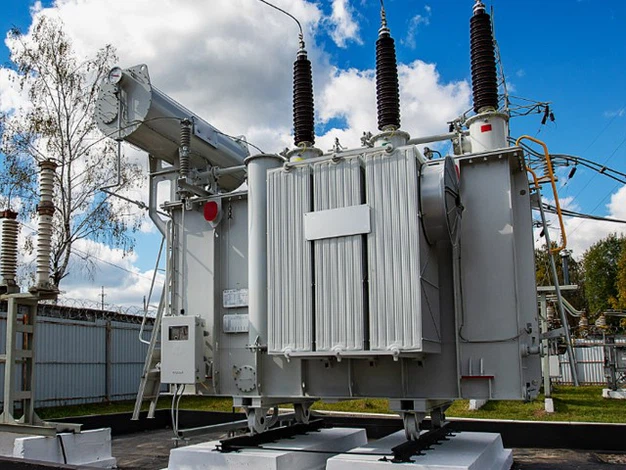
Power transformers are electrical instruments used in transmitting electrical power from one circuit to another without changing the frequency. They operate by the principle of electromagnetic induction. They are used in transmitting electrical power between generators and distribution primary circuits. Power transformers are used to step up or step down the voltage in distribution networks. Since they have no rotating or moving parts, these instruments are considered static devices. These instruments work based on an alternating current (AC) electrical system.


Types of Power Transformers
Step-up and step-down transformers: These transformers are used to increase or decrease the voltage level of an AC supply. A step-up transformer has more turns in the secondary winding than in the primary winding, while a step-down transformer has fewer turns in the secondary winding than in the primary winding.
Single-phase and three-phase transformers: These transformers are used to handle single-phase or three-phase AC supplies. A single-phase transformer has one primary winding and one secondary winding, while a three-phase transformer has three primary windings and three secondary windings that are connected in star or delta configuration.
Two-winding and autotransformers: These transformers have either two separate windings or one common winding for both primary and secondary circuits. A two-winding transformer is used when the voltage ratio is greater than 2, while an autotransformer is used when the voltage ratio is less than 2.
Distribution and power transformers: These transformers are used for different purposes in the power system network. A distribution transformer is used to step down the voltage for distribution to domestic or commercial users. It has good voltage regulation and operates at full load or near full load most of the time. A power transformer is used to step up or step down the voltage for transmission between generating stations and substations. It has poor voltage regulation and operates at variable loads depending on the demand.
Instrument transformers: These transformers are used to measure high voltages and currents in a circuit by stepping them down to lower values that can be measured by conventional instruments. They include current transformers (CT) and potential transformers (PT).
Oil-cooled and dry-type transformers: These transformers differ in their cooling methods. Oil-cooled transformers use mineral oil as a cooling medium that circulates through radiators or heat exchangers. Dry-type transformers use air as a cooling medium that flows through vents or fans.
Core type and shell type transformers: These transformers differ in their core shapes and winding arrangements. A core-type transformer has a rectangular core with two vertical limbs and a horizontal yoke. The windings are cylindrical and concentric and are placed on both limbs. A shell-type transformer has a central limb and two outer limbs that form a shell around the windings. The windings are sandwiched between the limbs and have multiple layers.
Outdoor and indoor transformers: These transformers differ in their installation locations and protection levels. Outdoor transformers are designed to withstand harsh weather conditions and are usually oil-cooled and enclosed in metal tanks. Indoor transformers are designed to operate in controlled environments and are usually dry-type and enclosed in metal cabinets.

The structure of the power transformer is modeled with metal that is covered by sheets. It is fixed into either a shell type or core type. The structures of the transformer are wound and attached, employing conductors to produce three 1-phase or one 3-phase transformer. Aurogra
The structure of the transformer is enveloped in a fire retardant particular fluid inside a tank. The conservatory on top of the liquid tank allows for the increasing oil to cover it completely. The charger of the load drains to the side of the tank varies the no of turns on the low current-high voltage section for superior voltage adjustment.
GNEE Power Transformer


Power Transformer Losses
There are four main types of transformer losses that affect the efficiency of power transformers:
Copper Loss: Copper losses, sometimes called resistive or I2R losses, are the energy losses caused by the electrical resistance of the windings to current flow. The electrical resistance of material measures the opposition to the current flow; it depends on the length, nature, cross-sectional area, and temperature of the material. Copper losses are also influenced by the amount of current flowing through the circuit. Copper losses are quantified by calculating the value of I2R.
Hysteresis Loss: Hysteresis losses are caused by the friction encountered by the ferromagnetic molecules in the core due to magnetization and demagnetization, as the magnetizing force flows in forward and reverse directions. The internal friction developed causes heat to develop within the transformer.
Eddy Current Loss: Eddy current is produced in the core’s cross-section as a result of the fluctuating magnetic field. It is minimized by laminating thin metal sheets (laminas) together to construct the transformer core. The laminas are insulated by a special coating. Through lamination, the eddy current is produced and flows separately in all laminas, and the path for the eddy current is drastically reduced.
Flux Loss: Flux losses occur when some of the magnetic flux lines from the primary winding flow through the air instead of passing through the secondary winding. This loss can be caused by the magnetic saturation of the core. In this circumstance, the core cannot accept flux lines anymore. The smaller ratio of the reluctance of the air and the core also contributes to flux loss.
Power Transformer Applications
Power generation: Power transformers are used to step up the voltage generated by power plants for transmission to substations.
Power transmission: Power transformers are used to step up or step down the voltage at different points of the transmission network for efficient power delivery.
Power distribution: Power transformers are used to step down the voltage for distribution to various consumers. They also provide multiple voltage levels for different applications, such as lighting, heating, cooling, communication, etc.
Power generation: Power transformers are used to step up the voltage of the electricity generated by power plants before it is sent to the grid. This reduces the current and the line losses during transmission.
Lighting: Power transformers are used to provide low voltage and high currents for lighting systems, such as fluorescent lamps, neon signs, etc.
Audio systems: Power transformers are used to isolate and amplify audio signals in speakers, amplifiers, microphones, etc.
Electronic equipment: Power transformers are used to provide low voltage and regulated power supply for electronic devices, such as computers, televisions, radios, etc.
Benefits of Power Transformers
Power transformers offer numerous benefits for power distribution and power conversion applications, including:
1) Energy efficiency:
Transformers are designed to be power efficient, which helps reduce power losses and save energy.
2) Increased power quality:
Transformers help improve power quality by providing power at a safe and consistent voltage level.
3) Improved safety:
Transformers provide electrical isolation between power sources and power loads, which helps increase safety.
4) Increased power capacity:
Transformers can increase the power capacity of power systems, which helps power more loads.
5) Cost savings:
Transformers are cost-effective power solutions and can help reduce power costs in power distribution systems.
Why use a power transformer?
Electrical power is generated at low voltage levels, which results in high current and high line losses due to ohmic heating. By using a step-up transformer at the generating station, the voltage level can be increased, and the current can be reduced, which reduces the line losses and improves the power factor. Similarly, at the receiving end, a step-down transformer can be used to lower the voltage level to a suitable value for distribution and consumption.
Power transformers can provide electrical isolation between two or more circuits that have different potentials or frequencies. This can prevent short circuits, ground faults, interference, and damage to sensitive equipment.
Power transformers can adjust the voltage and current levels of a circuit to match the load impedance with the source impedance. This can improve the power transfer and efficiency of the circuit.
Power transformers can provide different voltage levels for various purposes, such as lighting, heating, cooling, communication, etc. For example, a three-phase transformer can provide three-phase power for industrial applications, as well as single-phase power for domestic applications.
Difference between Power Transformer and Distribution Transformer

The power transformer is commonly performed in full load since it is modeled to have high efficiency at 100% load. Otherwise, the distribution transformer has high efficiency once the load stays between 50% and 70%. So, distribution transformers are not desirable to operate at 100% load constantly.
Because power transformers lead to large voltages during step-down and step-up, the windings have great insulation when compared with distribution types or instrument transformers. Since they apply high-level insulation, they are very massive in size and are also too heavy.
Since power transformers are typically not connected to homes straightly, they experience little load fluctuations, while on the other hand, distribution types experience heavy load variations.
GNEE Transformer ensure that each one of our delivered units has undergone rigorous full acceptance testing. We provide one-package service from consulting, quoting, manufacturing, installation, commissioning, training to after sale services, with the support of our customers, we had achieved significant result in our business, our products are now operating in more than 500 counties in the world.
Our address
No.4-1114, BEICHEN BUILDING, BEICANG TOWN, BEICHEN DISTRICT, TIANJIN, CHINA
Phone Number
+86-15824687445
sales@gneesteels.com

Customer Visit


GNEE Factory


Packaging&Shipping


FAQ
Q: What Is the Purpose of a Power Transformer?
Q: What is the kVA rating of a power transformer?
Q: What is the difference between a power transformer and voltage transformer?
Q: What is the efficiency of a power transformer?
Q: Where are power transformers used?
Q: What is the purpose of a power transformer?
Q: How does a power transformer work?
Q: What is power transformer advantage?
Q: What is the basic principle of power transformer?
Q: What is the main part of power transformer?
Q: What is power transformer diagram?
Henan Gnee New Material Co., ltd. is well-known as one of the leading power transformer manufacturers and suppliers in China. If you're going to buy customized power transformer made in China, welcome to get pricelist from our factory. Quality products and low price are available.
single phase power transformer, 230 KV 220kv Power Transformer, step down power transformer