


Established in 2008, GNEE Steel Group is an enterprise specializing in the production and processing of silicon steel products. The main product includes oriented silicon steel, non-oriented silicon steel, silicon steel coils and plate, silicon steel transformer cores and silicon steel transformers. We have exported steel to over 70 countries and collaborate with more than 600 companies worldwide.
One-stop Solution
Our capabilities range from customized materials solutions to materials-related services. We offer sales, purchasing, research and development, and designing services of silicon steel products to meet various requirements of customers worldwide.
High Quality
Every process of our products is under strict quality inspection. Our vision is to provide top quality steel products for the global market through our expertise and experience. Also, we have plentiful steel supply resources to produce good silicon steel products.
Wide Range of Application
Our products are widely used in field of automotive production, packaging and containers, construction and infrastructure, agriculture, renewable energy, electrical industry etc.
What Is Oil Immersed Transformer
Oil-immersed transformers are voltage conversion devices that use oil to keep the transformer cool. This type of transformer structure is mounted in a welded steel oil tank filled with oil. When an oil-immersed transformer is in use, the heat generated by the coil and iron core is first transferred to the insulating oil, then to the cooling fluid. Due to the liquid's inflammability, oil-filled transformers are mostly used in outdoor installations.


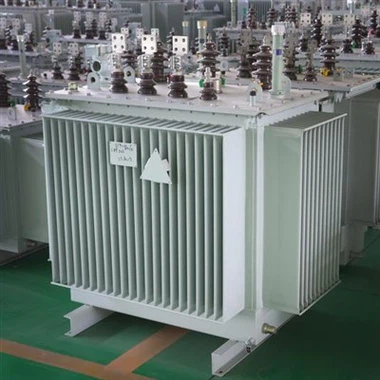


Good Insulation Properties: Oil is an excellent insulating material that can effectively isolate windings and provide good electrical insulation properties.
Low Operating Costs: Oil-immersed transformers are cheaper than dry-type transformers and have a wider range of applications.
High Efficiency: Transformer oil has good insulation and anti-oxidation ability, which can effectively reduce losses and increase the service life of transformers.
Fast Heat Dissipation: Insulating oil and radiator improve the heat dissipation efficiency of the transformer and increase the load capacity of the transformer.
Strong Insulation: Transformer oil can effectively isolate the inner winding of the transformer and the influence of the external environment, ensuring the safety and stability of the transformer operation.
High Power Density: Oil-immersed transformers can transmit larger power relative to their volume and have higher power density.
Low Noise: Due to the better insulating properties of insulating oil, oil-immersed transformers usually produce relatively low noise.
Smaller Volume: Under the same power, oil-immersed transformers usually have relatively smaller volumes.
Adapt to Large-Capacity Needs: Oil-immersed transformers are suitable for large-capacity, high-voltage power systems and can meet the needs of large-scale power transmission and distribution.
Insulation Materials Used In Oil-Immersed Transformers
Diamond Dotted Paper
Diamond dotted paper is a widely used insulation material in oil-immersed transformers. It is primarily utilized as a layer between the winding turns to enhance the mechanical and electrical strength of the insulation system. The diamond-shaped dots on the paper enable better oil impregnation, reducing the risk of partial discharges and improving overall insulation performance.
Oil Duct Strip
Oil duct strips are crucial for ensuring proper oil circulation within the transformer. These strips, made of insulating material, are strategically placed in the winding structure to create channels for oil flow. They facilitate efficient cooling of the transformer, preventing excessive heat buildup and maintaining optimal operating temperatures.
Electrical Polyester Shrinkable Tape
Electrical polyester shrinkable tape is commonly used for insulation and protection purposes in oil-immersed transformers. It provides excellent electrical insulation properties and acts as a barrier against moisture and contaminants. This tape is often used for securing winding leads, enhancing the overall insulation integrity of the transformer.
Electrical Cloth Tape
Electrical cloth tape, also known as friction tape, is utilized in oil-immersed transformers for various applications. This tape provides excellent mechanical protection, acting as a barrier against abrasion, vibration, and physical damage. It is commonly used for securing and bundling cables, enhancing the overall durability and reliability of the transformer.
Unidirectional Binding Tape
Unidirectional binding tape is employed for strengthening and reinforcing the winding structure of oil-immersed transformers. It is used to secure the windings and maintain their shape, preventing movement and potential damage during operation or transportation. This tape enhances the mechanical stability of the transformer, ensuring long-term performance.
Crepe Paper
Crepe paper is extensively used for insulation wrapping and cushioning applications in oil-immersed transformers. It provides excellent dielectric strength, flexibility, and resistance to moisture. Crepe paper is commonly used to insulate individual windings, creating a barrier between the conductors and enhancing overall insulation performance.
Cable Paper
Cable paper, also known as insulation paper, is utilized in oil-immersed transformers for various applications. It provides excellent electrical insulation properties and is often employed for insulating leads, connections, and other areas requiring reliable insulation. Cable paper ensures the safety and performance of the transformer's electrical components.

Single-Phase
Single-phase transformers use one pair of windings. It's used in lower-load situations, such as rural areas.
Three-Phase
Three-phase transformers are made up of three pairs of windings. The windings typically go around a core sectioned into three parts. Three-phase transformers are used in higher-load areas and can supply three circuits with energy.
Power Transformers
Power transformers are designed to handle much higher loads. They can step voltages up or down and transmit a current from one place to another.
Distribution Transformers
Distribution transformers transmit lower voltages from the electrical grid to homes and businesses. They are much smaller than power transformers.
Pole-Mounted And Pad-Mounted
Pole-mounted transformers are connected to an electrical pole. Pad-mounted transformers are mounted to a concrete pad on the ground.
Components of Oil Immersed Transformer
Core
The core of the transformer is used to support the windings. It is made of soft iron to reduce eddy current loss and Hysteresis loss and provides a low reluctance path to the flow of magnetic flux. The diameter of a transformer's core is directly proportional to copper loss and inversely proportional to iron loss.
Windings
Windings consist of several copper coil turns bundled together, each bundle connected to form a complete winding. Windings can be based either on the input-output supply or on the voltage range. Windings that are based on supply are classified into primary and secondary windings, meaning the windings to which the input and output voltage are applied respectively. On the other hand, windings based on voltage range can be classified into high-voltage and low-voltage windings.
Insulating Materials
Insulating materials like paper and cardboard are used to isolate primary and secondary windings from each other as well as the transformer core. These windings are made of copper due to high conductivity and ductility. High conductivity minimizes the amount of copper needed and minimizes losses. Moreover, high ductility results in easy bending of conductors into tight winding around the core that also minimizes the amount of copper and volume of winding.
Transformer Oil
The transformer oil insulates as well as cools the core and coil assembly. The core and windings of the transformer must be completely immersed in the oil that normally contains hydrocarbon mineral oils.
Conservator
The conservator is an airtight metallic cylindrical drum fitted above the transformer that conserves the transformer oil. It is vented at the top and is filled only half with the oil to allow expansion and contraction during temperature variations. However, the main tank of the transformer with which the conservator is connected is filled with the oil through a pipeline.
Breather
The breather is a cylindrical container filled with silica gel, which is used to keep the air that enters the tank moisture-free. This is because the insulating oil when it reacts with moisture can affect the insulation and cause internal faults, which is why it is a must to keep the air free from moisture. In the breather, when the air passes through the silica gel, the moisture contents are absorbed by the silica crystals.
Tap Changer
To balance voltage variations within the transformer, tap changers are used. There are two types of tap changers - on-load and off-load. In on-load tap changers, tapping can be changed without isolating the transformer from the supply, while in off-load, the transformer needs to be disconnected from the supply.
Cooling Tubes
As the name suggests, cooling tubes are used to cool the transformer oil. The circulation of oil within the transformer may be natural or forced. In the case of natural circulation, when the oil temperature rises, the hot oil naturally moves to the top, and cold oil moves down, while in the case of forced circulation, an eternal pump is used.
How to Choose Oil Immersed Transformer
Define Your Load Characteristics
The first step in selecting a transformer is to define your load characteristics, such as the power rating, the voltage level, the frequency, the power factor, the harmonic content, and the load variation. These parameters will determine the size, the type, and the insulation class of the transformer that you need. For example, if you have a high-power load that operates at a low voltage, you will need a step-down transformer that can handle the high current and the low power factor. If you have a load that generates harmonics, you will need a transformer that can withstand the additional losses and heating effects.
Choose Your Transformer Type
The next step is to choose your transformer type, based on the application, the location, and the performance requirements. There are two main types of transformers: dry-type and liquid-filled. Dry-type transformers use air or gas as the cooling and insulating medium, while liquid-filled transformers use oil or synthetic fluids. Dry-type transformers are more suitable for indoor or urban installations, as they are safer, cleaner, and more compact. Liquid-filled transformers are more suitable for outdoor or rural installations, as they offer better cooling, higher efficiency, and longer life spans.
Evaluate Your System Configuration
The third step is to evaluate your system configuration, such as the number and the arrangement of the transformers, the type and the length of the conductors, the presence and the location of the protective devices, and the grounding method. These factors will affect the voltage regulation, the short-circuit capability, the fault current level, and the reliability of your power system. For example, if you have a radial system with a single transformer, you will need a transformer that can provide adequate voltage regulation and fault current. If you have a parallel system with multiple transformers, you will need transformers that are identical and coordinated.
Consider Your Environmental Conditions
The fourth step is to consider your environmental conditions, such as the ambient temperature, humidity, altitude, pollution, and noise level. These factors will influence the cooling, the insulation, the corrosion, and the noise performance of your transformer. For example, if you have a high ambient temperature, you will need a transformer that can operate at a higher temperature rise and has a higher insulation class. If you have high humidity, you will need a transformer that has a sealed or nitrogen-filled tank to prevent moisture ingress.
Compare Your Maintenance Requirements
The fifth step is to compare your maintenance requirements, such as the frequency, duration, cost, and availability of the maintenance services. These factors will affect the reliability, availability, and life cycle cost of your transformer. For example, if you have a low maintenance budget, you will need a transformer that has a low failure rate and a long service life. If you have a high maintenance availability, you will need a transformer that has easy access and replaceable parts.
Analyze Your Cost-Effectiveness
The final step is to analyze your cost-effectiveness, which is the balance between the initial investment, the operating expenses, and the benefits of your transformer. These factors will depend on the price, the efficiency, the losses, the depreciation, and the revenue of your transformer. For example, if you have a high initial investment, you will need a transformer that has a high efficiency and a low loss. If you have a high revenue potential, you will need a transformer that has a high availability and a low downtime.
Design and Planning
In the design and planning phase, a detailed design is created for the transformer, including the size and configuration of the windings and core, the type of oil to be used, and the type of enclosure or casing. This phase also involves calculating the electrical ratings and performance characteristics of the transformer.
Procurement of Materials and Components
The next step is to procure the materials and components needed to build the transformer, such as the windings, core, oil, and enclosure. This step may involve working with suppliers to ensure that the materials are of the required quality and are delivered on time.
Assembly and Testing
The assembly and testing phase involves assembling the various components of the transformer, such as the windings, core, and enclosure, and testing them to ensure that they meet the design specifications. This may involve using specialized equipment and tools to assemble and test the transformer.
Finishing and Packaging
Finally, the transformer undergoes the finishing and packaging phase, which involves completing any final steps, such as painting or labeling the transformer, and packaging it for shipping to the customer.

Regular Oil Sampling and Testing
The oil in an oil-immersed transformer serves as both an electrical insulator and a coolant. Over time, the oil can degrade, and contaminants can accumulate. Regular oil sampling and testing can identify any issues before they cause serious problems. The oil should be tested for acidity, water content, and other impurities.
Keep the Transformer Clean
A clean transformer is less likely to suffer from overheating or other issues. Regular cleaning of the transformer's exterior can prevent dirt and debris from accumulating, which can cause insulation problems.
Check the Transformer's Gaskets
The gaskets on an oil-immersed transformer help to prevent leaks. Over time, gaskets can become worn or damaged, which can cause leaks. Regular inspection of the gaskets can identify any issues before they become serious.
Monitor the Transformer's Temperature
Overheating can cause serious damage to an oil-immersed transformer. Monitoring the transformer's temperature can identify any issues before they cause serious problems. A sudden increase in temperature can be an early warning sign of a problem.
Check for Signs of Corrosion
Corrosion can occur in the tank or other metal components of an oil-immersed transformer. Regular inspection for signs of corrosion can identify any issues before they become serious.
Maintain the Oil Level
The oil level in an oil-immersed transformer should be maintained at the proper level. Too little oil can cause overheating, while too much oil can cause leaks.
Replace Damaged or Worn Components
Over time, components of an oil-immersed transformer can become worn or damaged. Replacing these components can prevent serious problems from occurring.
Troubleshooting for Oil-Filled Transformers
Presence of Sludge
Sludge formation happens due to chemical reactions such as polymerization and decomposition, which create solids that accumulate within the winding structure. Moisture and humidity can also cause oil oxidation and deterioration.
Signs of Aging
Signs of aging like deteriorated insulation can be clues to your machine's overall condition. Components will naturally wear out and require more upkeep with age, at which point it might be best to look into upgrading your system.
Oil Leaks
Leakage can originate from gaskets, cooling radiators/fins, tanks, gaskets, and various other transformer components. They can be fixed if they are minor and infrequent, but more constant occurrences signal a bigger problem.
Radiator Blockages
A blocked or closed radiator will appear cool when you take pictures of it with an infrared camera. If your radiator has this problem, take care of it as soon as you find it. If a transformer's operating temperature increases by 46.4 to 50 degrees Fahrenheit, its lifespan will shorten by one-half. This occurs because the materials insulating the windings and structures begin degrading.
Mineral Deposits
Avoid getting water on the transformer's tank or radiator. The minerals will create deposits on the surfaces of these components and become extremely difficult to remove. These also reduce the cooling system's efficiency, making it easier for your unit to overheat and experience failure.
Electrical Failure
Electrical issues are often common causes of transformer failures. They can be triggered by line faults and voltage spikes. A high-quality surge protection system can prevent this from happening.
Our Factory
GNEE Steel Group are silicon steel product manufacturer from China. We possess a factory covering over 35,000 square meters and employs more than 200 personnel.


FAQ
Q: What are oil-immersed transformers?
Q: What is oil-filled transformer used for?
Q: Why are transformers submerged in oil?
Q: How do oil-immersed transformers handle overloads?
Q: How long do oil-filled transformers usually last?
Q: How is it different from a dry-type transformer?
Q: Why is transformer important in modern life?
Q: What is the maintenance of an oil-immersed transformer?
Q: What are the main functions of transformer?
Q: What causes transformer oil leakage?
Q: What are maintenance checklists for transformers?
Q: What is the life expectancy of an oil transformer?
Q: What is the oil-filled transformer used for?
Q: What are the advantages of oil immersed transformer?
Q: Why it is important to maintain the oil temperature of oil-immersed transformers?
Henan GNEE Electric Co., Ltd. is well-known as one of the leading oil immersed transformer manufacturers and suppliers in China. If you're going to buy customized oil immersed transformer made in China, welcome to get pricelist from our factory. Quality products and low price are available.
20kv Series Oil Immersed Distribution Transformer, 20kv hermetically sealed oil filled transformer, 20kv oil immersed current transformer