


About Nanocrystalline Core
Oct 15, 2025
Leave a message
About Nanocrystalline Core
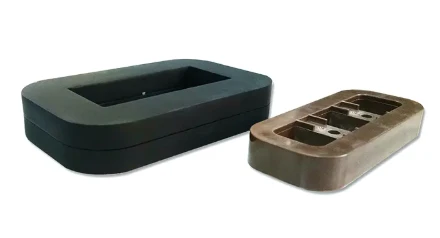
Also known by the name metallic glass cores, Nanocrystalline Magnetic Cores have unique microstructure. When observed under high-power instruments, these cores seem to have nanocrystals, i.e., well-defined crystals per nanometer of the core material. These crystals are embedded in the amorphous or non-crystalline matrix, offering revolutionizing magnetic properties.
These cores are widely used to reduce energy loss and improve charging efficiency, shielding electromagnetic interference to mobile phones and wireless charging receiving terminals. You will find them in the car: wireless chargers, transformers, home appliances, and more.
How Nanocrystalline Cores Are Revolutionizing the Industry?
Nanocrystalline Cores are revolutionizing different industries, including electronics, magnetics, etc. Let's have a look at some of the tempting perks that you should consider when planning on getting cores for your industry.
Minimized Core Loss – Hysteresis and eddy current losses are two of the most common losses observed during the working of typical cores. Owing to this, these cores have minimal power loss, reduced heat production, and increased overall system efficiency. Even at significantly high temperatures, losses are fairly reduced compared to other cores.
Increased Magnetic Induction – These cores come with increased magnetic induction that contributes to miniaturization, as small-sized cores would provide enough magnetic induction that a larger-sized core of other magnetic materials wouldn't.
Flexible Manufacturing – Their production is pretty flexible; you can customize them according to your desired impedance, frequency, and filtering characteristics. This property can prove extremely effective in electronics.
Higer Curie Temperature – Curie temperature refers to the temperature point when the magnetic materials lose their permanent magnetic properties and transform into induced magnets. Nanocrystalline Magnetic Cores have higher Curie temperatures, and the rate of change in the performance over temperature fluctuations is also linear.
Higher Frequency Properties – Moreover, they can operate on higher frequency, being a suitable component for emerging technologies, especially EV Charging. Owing to the higher saturation magnetic inductions, they can also manage higher current applications with strong interference.
In short, we have a plethora of reasons to back the revolutionization standards set by th Nanocrystalline Toroidal Cores. Let's now have a look at the different types of these cores.
The 8 Different Types of Nanocrystalline Cores
Nanocrystalline Cores can be divided into multiple types depending on your specific requirements and the applications you want to use these cores. Hop on to develop a better understanding of each type!
1. Nanocrystalline Toroidal Core
The very first type on our list is the Nanocrystalline Toroidal Core, which is more like woven doughnuts with a central hole. Its distinct shape allows for reduced magnetic interference and effective magnetic flux containment. Their common applications include high-frequency inductors and transformers with minimal core losses.
2. C-Core Nanocrystalline Cores
If you are into getting a Nanocrystalline Core with linearity in performance over different temperature ranges, ensuring precise current measurements, you must get C-core Nanocrystalline Cores. As the name suggests, these cores are normally C-shaped with applications in current sensing applications and Current Transformers (CTs).
3. U-Core Nanocrystalline Cores
These U-shaped Nanocrystalline Cores offer ease of connectivity when used in transformers and other devices, like inductors, etc. The best part? They have increased magnetic flux density.
4. E-Core Nanocrystalline Cores
These types boast shapes resembling the letter E and are utilized widely in power transformers, etc. Owing to the unique shape of the E-cross section, you can stay rest assured about the effective magnetic coupling and maximized flux that, in turn, contribute to the increased production of induced current.
5. ETD-Core Nanocrystalline Cores
Here comes another type with an ETD-shaped cross section used in converters and power supplies – everywhere you need compact, precise, and efficient magnetic components.
6. Multi-Aperture Nanocrystalline Cores
Apertures refer to holes, so these cores feature a plethora of holes on their body to ease the winding of the conductor around the core. You will find them commonly used in high-frequency conductors and common mode chokes where multiple windings are needed.
7. RM-Core Nanocrystalline Cores
Are you dealing with low-profile inductors and transformers? The RM-shaped cores will be your best bet. You can attain all the above-mentioned Nanocrystalline Core benefits from these; the major difference between the cores remains their shapes.
8. Custom Nanocrystalline Cores
Depending on the equipment you want to use, you can also customize these cores to your desired shape, size, and weight. Imagine you plan to invent advanced equipment, and none of the Nanocrystalline Core types seem to fit in. Just get in touch with premium manufacturers and get them customized per your requirements.
You can also ask them to set the specifications according to your demand, meaning the temperature tolerating capacity and more.
How to Choose Between the Different Nanocrystalline Cores?
Now you have all the details about the different types, you must wonder how to choose between them. Several factors account for these aspects, including permeability, capacity, etc. Let's have a look at a few of these!
Operating Frequency and Core Shape Relation
The Nanocrystalline Core shape closely influences the operating frequency owing to the extent to which it minimizes the eddy current losses. So, depending on your required frequency, you can choose the most preferred shaped core.
Extent of Magnetic Permeability
Magnetic permeability, also known as magnetic capability, is indeed another important factor. The more the core is permeable, the more it allows the flow of magnetic lines of force through the material. Different types have distinct permeability; if lower, that type might have other notable advantages.
Power Rating
Power rating refers to the power holding capacity. It also varies depending on the core type, with some cores being ideal for low-power applications while others being great for higher power levels.
Specific Application
Cores are widely used in transformers, inductors, and multiple other devices, with some requiring specific shape cores to ensure core loss constraints and ease of winding.
Environmental Considerations
Lastly, environmental considerations might require a core with specified environmental or thermal stability for effective working.
Budget Consideration
How much cost you are willing to spend is another important consideration. You will have to finalize between the different types, depending on which will prove more cost-effective and budget-friendly in the long run.
Size and Weight
Different types have their distinct size and weight specifications. For instance, a toroidal core ensures improved magnetic performance when being space-efficient. Sometimes, you may find multi-aperture cores more useful because of their ease of winding with their pre-built holes. This special winding style also reduces energy loss, so it's a worthy pick in most cases.
GNEE offer a range of cores that are used mainly in the following applications:
Motor Drivers – TranSmart offers Toroidal Gap Cores and Rectangular ones, which you can utilize in Current Transducers or Current Sensors. These electronic components are then used in the DC motor drives and controls.
Instrument Transformers – Their Nanocrystalline Cores have optimal accuracy of up to 0.2S Current Transformers. You can obtain both the components for low-voltage and medium-voltage transformers. These include the Toroidal core, C core, and more.
Home Appliances – You can get customized Nanocrystalline Cores for common mode chokes from TranSmart. Their effective functioning and premium quality will surely inspire you. For more information, please check the official website.
Nanocrystalline c Core specification
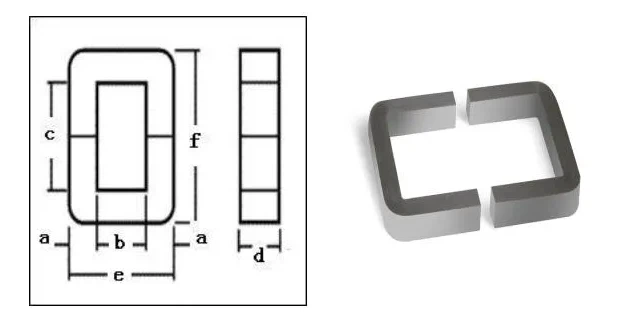
| Core Build | Window Width | Core Height | Core Width | Core Length | |||||
| a(mm) | ± | b(mm) | c(mm) | d(mm) | ± | e(mm) | ± | f(mm) | ± |
| 9 | 0.5 | 10 | 32.8 | 15 | 0.5 | 28 | 1 | 50.8 | 1.25 |
| 10 | 0.5 | 11 | 33 | 20 | 0.5 | 31 | 1 | 53 | 2 |
| 11 | 0.5 | 13 | 30 | 20 | 0.5 | 35 | 1 | 52 | 2 |
| 11 | 0.5 | 13 | 40 | 20 | 0.5 | 35 | 1 | 62 | 2 |
| 11 | 0.5 | 13 | 40 | 25 | 0.5 | 35 | 1 | 62 | 2 |
| 11 | 0.8 | 13 | 50 | 25 | 0.5 | 35 | 1 | 72 | 2 |
| 11 | 0.8 | 13 | 50 | 30 | 0.5 | 35 | 1 | 72 | 2 |
| 13 | 0.8 | 15 | 56 | 25 | 0.5 | 41 | 1 | 82 | 2 |
| 13 | 0.8 | 15 | 56 | 30 | 0.5 | 41 | 1 | 82 | 2 |
| 13 | 0.8 | 15 | 56 | 35 | 0.5 | 41 | 1 | 82 | 2 |
| 16 | 0.8 | 20 | 70 | 25 | 0.5 | 52 | 1 | 102 | 3 |
| 16 | 1 | 20 | 70 | 30 | 0.5 | 52 | 1 | 102 | 3 |
| 16 | 1 | 20 | 70 | 40 | 0.5 | 52 | 1 | 102 | 3 |
| 16 | 1 | 20 | 70 | 45 | 1 | 52 | 1 | 102 | 3 |
| 19 | 1 | 25 | 83 | 35 | 1 | 63 | 1 | 121 | 3 |
| 19 | 1 | 25 | 83 | 40 | 1 | 63 | 1 | 121 | 3 |
| 19 | 1 | 25 | 83 | 50 | 1 | 63 | 1 | 121 | 3 |
| 19 | 1 | 25 | 90 | 60 | 1 | 63 | 1 | 128 | 3 |
| 22 | 1 | 35 | 85 | 50 | 1 | 79 | 1 | 129 | 4 |
| 22 | 1 | 35 | 85 | 65 | 1 | 79 | 1 | 129 | 4 |
| 25 | 1 | 40 | 85 | 55 | 1 | 90 | 1 | 135 | 4 |
| 25 | 1 | 40 | 85 | 70 | 1 | 90 | 1 | 135 | 4 |
| 25 | 1 | 40 | 85 | 85 | 1.5 | 90 | 1 | 135 | 4 |
| 30 | 1 | 40 | 85 | 85 | 1.5 | 100 | 1 | 155 | 4 |
| 33 | 1 | 40 | 105 | 85 | 1.5 | 106 | 1 | 171 | 5 |
| Note: Additional sizes can be customized to meet specific customer requirements. | |||||||||
GNEE Featured Products
Gnee provides premium iron cores to the world. Our cores can be selected in a wide range of materials, shapes, applications, manufacturing techniques, etc., to meet customers' diverse demands. Explore our wide product range now~



Manufacturing Process

1. Raw Material Sourcing

2. Slitting

3. Punching

4. Laminating

5. Core Forming

6. testing
GNEE New Material
Founded in 2008 and located in Anyang in China, GNEE New Material is a high-tech enterprise specializing in researching and manufacturing iron core products.
The company currently occupies over 20,000 square meters and employs more than 200 people, including over 80 professionals. After more than 18 years of development, we have built our own magnetic material production base and independently develope, produce, and sell various kinds of iron cores. The common types include silicon steel cores, motor cores, transformer cores, toroidal iron cores, special-shaped cores, custom cores, and others. Our cores are widely applied in different sectors including transformers, motors, mutual inductors, voltage stabilizers, welding machines, magnetic amplifiers, and instrumentation, providing diverse core solutions to global customers.

30+
Types of Products
18k+
Happy Clients
Why Choose GNEE New Material?
GNEE New Material was founded in 2008, which is a National High-tech Enterprise & Famous Brand Enterprise in China, developing into a professional manufacturer and supplier of high-quality iron cores.
18+
Over 18 years of success in the iron core industry;
National High-tech Enterprise & Famous Brand Enterprises in China;
200+
Over 200 employees;
The R&D team has more than 80 experienced engineers and the production team has more than 100 skilled staffs;
35+
Annual turnover up to 35 million dollor per year;
Owns many sets of highly automatic winding, annealing, and assembling machines;
1,000+
Over 1000 customers in domestic and overseas markets;
core Products are exported to more than 70 countries in the world;
GNEE New Material Factory Overview


Meet Our Sales Manager
"The Core of the Iron Core, the Power of Leadership" - See Our Great Decision-Makers Deeply Engaged in the Magnetic Materials Industry.

Edison Zhang
CEO

Kelly Zhang
General Manager

Alex Cao
Sales Manager
Industries Served

Automobile Industry

New Energy


Transformer Applications

Our Mission
Strive To Create world-class Iron core brand
With 18 Years of industry experience, we focus on the research, development, and manufacturing of high-quality iron cores for electricity, industrial control, new energy, and automotive markets