


Unlocking The Mysteries Of Toroidal Cores
Oct 16, 2025
Leave a message
Toroidal Core
A toroidal core is a magnetic core with a doughnut-like shape, used primarily in transformers and inductors. The unique shape isn't just for show; it serves a purpose. Unlike other core shapes, the toroidal design minimizes the amount of magnetic material exposed to the air. This reduces electromagnetic interference, making your devices run smoother.

Why Choose A Toroidal Core?
Efficiency
If you're all about getting the most bang for your buck, toroidal cores are your best bet. Their unique shape minimizes electromagnetic interference, which translates to more efficient energy use. In a world where every watt counts, that's a big deal.
But it's not just about saving energy. Reduced interference also means your devices will run more smoothly. Ever dealt with a glitchy smartphone or a laggy computer? A poorly designed core could be the culprit. With a toroidal core, you're less likely to run into these issues.
Size and Weight
Let's face it, nobody likes lugging around heavy, bulky devices. That's where toroidal cores come in handy. They're generally smaller and lighter than their counterparts, making them ideal for portable electronics.
The benefits extend beyond just convenience. A smaller, lighter core also means less material used, which can translate to cost savings. And in industries like aerospace or automotive design, where every ounce counts, choosing a toroidal core can make a significant difference.
How Do Toroidal Cores Work?
Basic Working Principle
Alright, let's get into the nitty-gritty. A toroidal core works by circulating magnetic flux within its doughnut-shaped structure. This is different from other core shapes, where the flux often leaks out, causing inefficiencies. In a toroidal core, the magnetic field lines are confined, making the core more effective at its job.
But why does this matter? Think of the magnetic flux as traffic on a freeway. When all the cars (flux lines) stay in their lanes (the core), traffic flows smoothly. But if cars start veering off onto the shoulder (leakage), you get congestion and delays. In the same way, a toroidal core keeps the magnetic flux in line, ensuring your devices run as efficiently as possible.
Winding Techniques
If you've ever peeked inside a transformer, you've probably noticed the coils of wire wound around the core. This winding is crucial for the core's function. For toroidal cores, the winding process can be a bit more complex due to the shape, but the payoff is worth it. Different winding techniques can optimize the core for various applications, from high-frequency transformers to low-frequency inductors.
The winding techniques also affect the core's electrical characteristics, like impedance and inductance. These might sound like jargon, but they're essential for understanding how a toroidal core will perform in different circuits. So, if you're planning a project, make sure to pay attention to the winding. It's not just a bunch of wires; it's the heart of the device.
Common Challenges And Solutions
Navigating the world of toroidal cores comes with its own set of hurdles. But don't worry, we've got the lowdown on how to tackle common challenges like cost, installation, and maintenance.
Cost
Let's talk money. Toroidal cores can be a bit pricey compared to other core types. Why? The unique shape and winding techniques often require specialized manufacturing processes. But don't let the cost scare you away. The efficiency and performance gains often justify the initial investment.
If you're on a budget, there are ways to cut costs without sacrificing quality. Consider buying in bulk or sourcing from vendors who specialize in affordable, high-quality cores. And remember, a more efficient core can lead to long-term savings on energy bills. So, you might spend a bit more upfront, but you'll save in the long run.
Installation
Installing a toroidal core isn't always a walk in the park. The doughnut shape can make the installation process a bit tricky, especially if you're new to the game. But don't fret; we've got some tips to make your life easier.
First, make sure you have the right tools for the job. Specialized toroid winding machines can help, but they're not always necessary for smaller projects. Second, pay attention to the orientation. The core's position within the circuit can affect its performance. And if you're stuck, don't hesitate to consult the experts. A little professional advice can go a long way.
ring core specification

| Magnetic core size(mm) | Protective box size(mm) | Effective cross-sectional area Ae(mm2) | Magnetic path length Ie(mm) | Maximum DC overcurrent class (A) |
||||||
| id | od | ht | ID | OD | HT | |||||
| 14 | 19 | 6.5 | 12 | 22 | 8 | 11.86 | 51.81 | 20 | ||
| 14 | 20 | 10 | 12 | 22.3 | 11.4 | 29.68 | 52.29 | 40 | ||
| 16 | 21 | 10 | 15 | 24 | 12.3 | 24.85 | 57.41 | 60 | ||
| 16 | 23 | 8 | 15 | 24 | 9.7 | 20.44 | 61.23 | 60 | ||
| 16 | 23 | 10 | 15 | 24 | 12.3 | 34.62 | 59.92 | 60 | ||
| 17 | 22 | 10 | 15.3 | 24.4 | 12.3 | 24.86 | 60.59 | 60 | ||
| 17 | 21 | 8 | 15.3 | 24 | 9.7 | 25.56 | 60.67 | 60 | ||
| 17 | 23 | 8 | 15.3 | 24.4 | 9.7 | 26.89 | 61.34 | 60 | ||
| 18 | 23 | 10 | 16.4 | 24.4 | 12.3 | 29.78 | 60.38 | 70 | ||
| 18 | 24 | 9 | 16.4 | 25 | 11.2 | 34.78 | 60.89 | 70 | ||
| 18 | 25 | 10 | 16.4 | 25.9 | 12.3 | 37.97 | 64.56 | 70 | ||
| 19 | 24 | 9 | 17.3 | 25 | 11.2 | 40.39 | 65.32 | 80 | ||
| 19 | 25 | 10 | 17.3 | 26 | 12.3 | 39.42 | 62.31 | 80 | ||
| 19 | 26 | 10 | 17.3 | 27.3 | 12.3 | 48.32 | 69.56 | 80 | ||
| 20 | 25 | 10 | 18.5 | 26.3 | 12.3 | 39.29 | 70.32 | 90 | ||
| 20 | 28 | 10 | 18.5 | 29 | 12.3 | 45.76 | 73.88 | 90 | ||
| 20 | 32 | 10 | 18.5 | 32.3 | 12.3 | 58.91 | 78.75 | 90 | ||
| 21 | 29 | 10 | 18.2 | 31.3 | 12.3 | 39.65 | 77.19 | 100 | ||
| 21 | 26 | 8 | 18.3 | 27.4 | 9.7 | 46.54 | 78.32 | 100 | ||
| 21 | 28 | 10 | 18.3 | 30 | 12.3 | 50.39 | 77.45 | 100 | ||
| 22 | 28 | 10 | 20.5 | 30 | 12.3 | 49.32 | 79.89 | 120 | ||
| 22 | 32 | 10 | 20.5 | 33.4 | 12.3 | 43.58 | 73.43 | 120 | ||
| 23 | 32 | 10 | 21.3 | 33.4 | 12.3 | 44.56 | 74.56 | 120 | ||
GNEE Featured Products
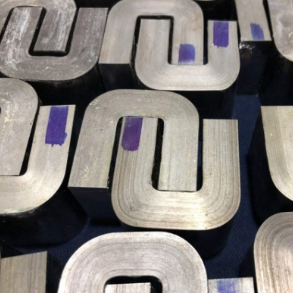
Gnee provides premium iron cores to the world. Our cores can be selected in a wide range of materials, shapes, applications, manufacturing techniques, etc., to meet customers' diverse demands. Explore our wide product range now~



Manufacturing Process

1. Raw Material Sourcing

2. Slitting

3. Punching

4. Laminating

5. Core Forming

6. testing
GNEE EC
Founded in 2008 and located in Anyang in China, Gnee Electric is a high-tech enterprise specializing in researching and manufacturing iron core products.
The company currently occupies over 20,000 square meters and employs more than 200 people, including over 80 professionals. After more than 18 years of development, we have built our own magnetic material production base and independently develope, produce, and sell various kinds of iron cores. The common types include silicon steel cores, motor cores, transformer cores, toroidal iron cores, special-shaped cores, custom cores, and others. Our cores are widely applied in different sectors including transformers, motors, mutual inductors, voltage stabilizers, welding machines, magnetic amplifiers, and instrumentation, providing diverse core solutions to global customers.

30+
Types of Products
18k+
Happy Clients
Why Choose GNEE EC?
GNEE EC was founded in 2008, which is a National High-tech Enterprise & Famous Brand Enterprise in China, developing into a professional manufacturer and supplier of high-quality iron cores.
18+
Over 18 years of success in the iron core industry;
National High-tech Enterprise & Famous Brand Enterprises in China;
200+
Over 200 employees;
The R&D team has more than 80 experienced engineers and the production team has more than 100 skilled staffs;
35+
Annual turnover up to 35 million dollor per year;
Owns many sets of highly automatic winding, annealing, and assembling machines;
1,000+
Over 1000 customers in domestic and overseas markets;
core Products are exported to more than 70 countries in the world;
Gnee Iron Core Factory Overview


Meet Our Sales Manager
"The Core of the Iron Core, the Power of Leadership" - See Our Great Decision-Makers Deeply Engaged in the Magnetic Materials Industry.

Edison Zhang
CEO

Kelly Zhang
General Manager

Alex Cao
Sales Manager
Industries Served

Automobile Industry

New Energy


Transformer Applications

Our Mission
Strive To Create world-class Iron core brand
With 18 Years of industry experience, we focus on the research, development, and manufacturing of high-quality iron cores for electricity, industrial control, new energy, and automotive markets