


Motor lamination manufacturing processes: A comparison of stamping, laser cutting and chemical etching
Oct 17, 2025
Leave a message
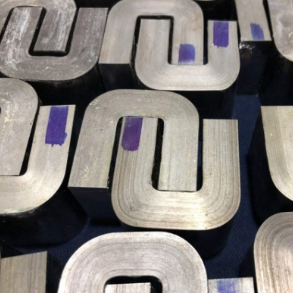
Motor laminations are critical components of an electric motor's stator and rotor, playing a vital role in enhancing its efficiency by limiting the size and strength of induced eddy currents, which can lead to power loss and generate waste heat.
Typically created by bonding together thin metal layers which form the electrical core, these components are widely used in a range of applications, from electric vehicles to industrial machinery.

Stamping motor laminations
Stator stamping is a traditional machining manufacturing process used to produce motor laminations. The process involves using a die, a specialised tool made from hardened steel, to cut the laminations from a sheet of metal. The die is specifically designed, shaped, and sized to meet the desired specifications of the stator lamination, ensuring the component is accurately cut from the sheet. This process is repeated for each lamination resulting in a stack which is bonded together, creating the electric motor core.
Stamping is quick and efficient, making it an ideal choice for high-volume production runs. However, the process is limited in terms of its high tooling set-up costs, increased lead times, and the potential for cutting-edge stress.
Laser cutting motor laminations
Laser cutting is another traditional machining process which is used to manufacture motor laminations. The laser cutting process begins by using computer-aided design (CAD) software to develop a precise and accurate tool meeting the requirements of the specification. Once complete, the CAD file is sent to the laser cutting machine, which uses a high-powered laser to cut the desired shape and size from the metal sheet. Like stamping, this process is repeated, and eventually, all the rotor laminations are bonded together to form the electric motor core.
Laser cutting is a highly precise, flexible, and accurate method for producing motor laminations, resulting in consistent high-quality results. However, there are some potential drawbacks to laser cut stator laminations which must be considered, such as the potential of thermal stress that can affect the magnetic properties of the motor stator laminations.
Chemical etching motor laminations
Photochemical etching, a lesser-known sheet metal machining process, involves selectively removing metal from a sheet using an etchant. The process is used to produce motor laminations due to its ability to manufacture precise and intricate designs accurately and consistently. A sheet of metal is coated in a layer of ultraviolet-sensitive photoresist, which is exposed to a pattern of light printing the design onto the sheet, causing some areas to harden and others to remain soft. The soft areas are then removed before ferric chloride is sprayed onto the sheet, selectively removing the metal. In the final step, the remaining photoresist is removed leaving behind the etched motor lamination.
Eliminating cutting and thermal edge stress from motor stator lamination production
One of the main benefits of using chemical etching as a stator lamination manufacturing process is the elimination of cutting-edge and thermal stress that can arise during stamping or laser cutting. Unlike these traditional manufacturing processes which involve contact or thermal energy, chemical etching is a non-contact, non-thermal process that utilises a chemical solution to remove metal from the surface of a sheet. As a result, the finished component has a smoother, more precise finish and can help to preserve the magnetic properties of the metal.
In addition, eradicating the potential for cutting-edge and thermal stress provides a more consistent and streamlined production process, improving overall efficiency.
Flexibility in motor lamination design and production
Another advantage of photochemical etching is its flexibility and ability to work with a wide range of materials including nickel alloys and silicon steels. This flexibility provides greater options for the design and production of rotor laminations, allowing for customisation to meet specific needs that may not be possible with other manufacturing methods like stamping or laser cutting.
Etching simplifies the modification of tooling as it does not require the need for expensive hard tooling or reprogramming of machinery. Since the process does not require expensive tooling equipment, it helps reduce costs and minimise lead times.
Conclusion
In conclusion, chemical etching provides numerous advantages over traditional machining methods such as stamping and laser cutting when manufacturing motor laminations. This non-contact, non-thermal process eliminates cutting-edge and thermal stress, resulting in consistent, high-quality finishes that preserve the metal's magnetic properties. Etching is also flexible, allowing for the accurate production of intricate designs with a wide range of materials. Furthermore, it simplifies tooling modifications, reduces costs, and minimises lead times making it a viable solution for industries seeking efficient and cost-effective manufacturing methods to improve motor lamination production.
specification
Magnetic and Technical Characteristics of Common Grain Oriented Electrical Steel Belt (Sheet)
| Type | Grade | Nominal Thickness | Nominal Core Loss P1.7/50 (W/kg) | Actual Core Loss P1.7/50 (W/kg) | Magnetic Induction J800(T) | Min. Lamination Coefficient(%) |
| CGO | H23Q110 | 0.23 | 1.10 | 1.08 | 1.85 | 0.955 |
| H23Q120 | 1.20 | 1.15 | ||||
| H23Q130 | 1.30 | 1.20 | ||||
| H27Q110 | 0.27 | 1.10 | 1.08 | 0.960 | ||
| H27Q120 | 1.20 | 1.15 | ||||
| H27Q130 | 1.30 | 1.20 | ||||
| H30Q120 | 0.3 | 1.20 | 1.15 | 0.965 | ||
| H30Q130 | 1.30 | 1.20 | ||||
| H35Q135 | 0.35 | 1.35 | 1.20 | |||
| H35Q145 | 1.45 | 1.25 | ||||
| H35Q155 | 1.55 | 1.35 |
Magnetic Properties and Technical Characteristics of Domain Refinement CGO
| Type | Grade | Nominal Thickness | Nominal Core Loss P1.7/50 (W/kg) | Actual Core Loss P1.7/50 (W/kg) | Magnetic Induction J800(T) | Min. Lamination Coefficient(%) |
| Domain Refinement CGO | H23QK100 | 0.23 | 1.00 | 0.96 | 1.85 | 0.955 |
| H23QK110 | 1.10 | 1.08 | ||||
| H23QK120 | 1.20 | 1.15 | ||||
| H23QK130 | 1.30 | 1.20 | ||||
| H27QK100 | 0.27 | 1.00 | 0.96 | 0.960 | ||
| H27QK105 | 1.05 | 1.00 | ||||
| H27QK110 | 1.10 | 1.08 | ||||
| H27QK120 | 1.20 | 1.15 | ||||
| H27QK130 | 1.30 | 1.20 | ||||
| H30QK100 | 0.3 | 1.00 | 0.96 | 0.965 | ||
| H30QK105 | 1.05 | 1.00 | ||||
| H30QK110 | 1.10 | 1.08 | ||||
| H30QK120 | 1.20 | 1.15 | ||||
| H30QK130 | 1.30 | 1.20 | ||||
| H35QK135 | 0.35 | 1.35 | 1.20 | |||
| H35QK145 | 1.45 | 1.25 | ||||
| H35QK155 | 1.55 | 1.35 |
Magnetic Properties and Technical Characteristics of High Permeability Electrical Steel
| Type | Grade | Nominal Thickness | Nominal Core Loss P1.7/50 (W/kg) | Actual Core Loss P1.7/50 (W/kg) | Magnetic Induction J800(T) | Min. Lamination Coefficient(%) |
| HIB | H18G080 | 0.18 | 0.80 | 0.79 | 1.89 | 0.950 |
| H18G085 | 0.85 | 0.83 | 1.89 | |||
| H18G095 | 0.95 | 0.91 | 1.88 | |||
| H20G080 | 0.2 | 0.80 | 0.80 | 1.90 | ||
| H20G085 | 0.85 | 0.84 | 1.89 | |||
| H20G095 | 0.95 | 0.92 | 1.88 | |||
| H23G085 | 0.23 | 0.85 | 0.85 | 1.90 | 0.955 | |
| H23G090 | 0.90 | 0.88 | 1.89 | |||
| H23G095 | 0.95 | 0.92 | 1.89 | |||
| H23G100 | 1.00 | 0.96 | 1.88 | |||
| H27G090 | 0.27 | 0.90 | 0.89 | 1.90 | 0.960 | |
| H27G095 | 0.95 | 0.93 | 1.90 | |||
| H27G100 | 1.00 | 0.96 | 1.90 | |||
| H27G110 | 1.10 | 1.03 | 1.89 | |||
| H27G120 | 1.20 | 1.10 | 1.88 | |||
| H30G105 | 0.3 | 1.05 | 1.01 | 1.90 | 0.965 | |
| H30G110 | 1.10 | 1.03 | 1.89 | |||
| H30G120 | 1.20 | 1.10 | 1.88 | |||
| H35G115 | 0.35 | 1.15 | 1.12 | 1.89 | ||
| H35G125 | 1.25 | 1.15 | 1.88 | |||
| H35G135 | 1.35 | 1.20 | 1.88 |
Magnetic Properties and Technical Characteristics of Domain Refinement HiB
| Type | Grade | Nominal Thickness | Nominal Core Loss P1.7/50 (W/kg) | Actual Core Loss P1.7/50 (W/kg) | Magnetic Induction J800(T) | Min. Lamination Coefficient(%) |
| Domain Refinement HIB | H20GK070 | 0.2 | 0.70 | 0.69 | 1.89 | 0.950 |
| H20GK075 | 0.75 | 0.74 | 1.88 | |||
| H20GK080 | 0.80 | 0.78 | 1.88 | |||
| H20GK085 | 0.85 | 0.82 | 1.88 | |||
| H20GK090 | 0.90 | 0.88 | 1.88 | |||
| H20GK095 | 0.95 | 0.92 | 1.88 | |||
| H23GK080 | 0.23 | 0.80 | 0.79 | 1.88 | 0.955 | |
| H23GK085 | 0.85 | 0.82 | 1.88 | |||
| H23GK090 | 0.90 | 0.88 | 1.88 | |||
| H23GK095 | 0.95 | 0.92 | 1.88 | |||
| H23GK100 | 1.00 | 0.96 | 1.98 | |||
| H27GK085 | 0.27 | 0.85 | 0.84 | 1.89 | 0.960 | |
| H27GK090 | 0.90 | 0.87 | 1.89 | |||
| H27GK095 | 0.95 | 0.92 | 1.88 | |||
| H27GK100 | 1.00 | 0.96 | 1.88 | |||
| H27GK105 | 1.05 | 1.00 | 1.88 | |||
| H27GK110 | 1.10 | 1.03 | 1.88 | |||
| H27GK120 | 1.20 | 1.10 | 1.88 | |||
| H30GK095 | 0.3 | 0.95 | 0.92 | 1.89 | 0.965 | |
| H30GK100 | 1.00 | 0.96 | 1.88 | |||
| H30GK105 | 1.05 | 1.00 | 1.88 | |||
| H30GK110 | 1.10 | 1.03 | 1.88 | |||
| H30GK120 | 1.20 | 1.10 | 1.88 |
GNEE Featured Products
Gnee provides premium iron cores to the world. Our cores can be selected in a wide range of materials, shapes, applications, manufacturing techniques, etc., to meet customers' diverse demands. Explore our wide product range now~



Manufacturing Process

1. Raw Material Sourcing

2. Slitting

3. Punching

4. Laminating

5. Core Forming

6. testing
GNEE EC
Founded in 2008 and located in Anyang in China, Gnee Electric is a high-tech enterprise specializing in researching and manufacturing iron core products.
The company currently occupies over 20,000 square meters and employs more than 200 people, including over 80 professionals. After more than 18 years of development, we have built our own magnetic material production base and independently develope, produce, and sell various kinds of iron cores. The common types include silicon steel cores, motor cores, transformer cores, toroidal iron cores, special-shaped cores, custom cores, and others. Our cores are widely applied in different sectors including transformers, motors, mutual inductors, voltage stabilizers, welding machines, magnetic amplifiers, and instrumentation, providing diverse core solutions to global customers.

30+
Types of Products
18k+
Happy Clients
Why Choose GNEE EC?
GNEE EC was founded in 2008, which is a National High-tech Enterprise & Famous Brand Enterprise in China, developing into a professional manufacturer and supplier of high-quality iron cores.
18+
Over 18 years of success in the iron core industry;
National High-tech Enterprise & Famous Brand Enterprises in China;
200+
Over 200 employees;
The R&D team has more than 80 experienced engineers and the production team has more than 100 skilled staffs;
35+
Annual turnover up to 35 million dollor per year;
Owns many sets of highly automatic winding, annealing, and assembling machines;
1,000+
Over 1000 customers in domestic and overseas markets;
core Products are exported to more than 70 countries in the world;
Gnee Iron Core Factory Overview


Meet Our Sales Manager
"The Core of the Iron Core, the Power of Leadership" - See Our Great Decision-Makers Deeply Engaged in the Magnetic Materials Industry.

Edison Zhang
CEO

Kelly Zhang
General Manager

Alex Cao
Sales Manager
Industries Served

Automobile Industry

New Energy


Transformer Applications

Our Mission
Strive To Create world-class Iron core brand
With 18 Years of industry experience, we focus on the research, development, and manufacturing of high-quality iron cores for electricity, industrial control, new energy, and automotive markets