


Choosing the Right Core: Exploring Different Types of Current Transformer Cores
Oct 16, 2025
Leave a message
Current Transformer Core
Types of Current Transformer Cores
Iron Core
Iron cores are the traditional choice for many applications. They offer high magnetic permeability and low core losses, making them efficient for general-purpose use. But they're not perfect. Iron cores can be susceptible to saturation, a state where the core can't handle any more magnetic flux, leading to inaccuracies.
So when should you opt for an iron core? They're ideal for applications where you need a balance of efficiency and cost-effectiveness. They're the "jack-of-all-trades" in the world of current transformer cores. But if you're dealing with specialized needs, you might want to look elsewhere.
Ferrite Core
Ferrite cores are the modern marvels of the current transformer world. Made from ferrimagnetic ceramic compounds, these cores offer high-frequency operation with low core losses. They're lighter and more compact than their iron counterparts, making them ideal for portable or space-constrained applications.
But where do ferrite cores really shine? In high-frequency applications. If you're dealing with radio frequencies or fast-switching digital circuits, ferrite is the way to go. However, they can be more expensive and less suitable for low-frequency, high-power applications. So, weigh your needs carefully.
Amorphous core
Silicon Steel Core
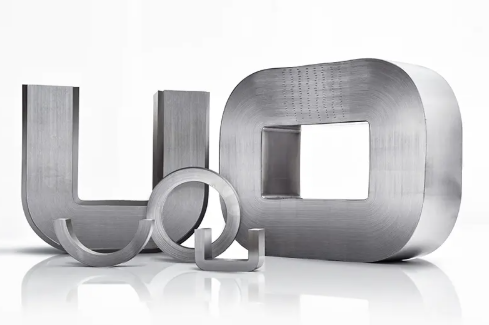
Silicon steel cores are another popular choice for current transformer cores due to their high magnetic permeability and low core losses. These cores are made from a material called electrical silicon steel, which is an alloy of iron and silico.
One key advantage of silicon steel cores is their ability to handle higher levels of primary current without saturating. This means they can accurately measure high currents without distortion or loss of accuracy.
Additionally, silicon steel cores have excellent temperature stability, making them ideal for applications in harsh environments where temperatures may vary widely. They also exhibit low hysteresis losses, ensuring efficient energy transfer and minimal heat generation.

How Does A Current Transformer Core Work?
Let's get a bit technical, but not too much. The core works on the principle of electromagnetic induction. When alternating current flows through the primary winding, it creates a magnetic field. This magnetic field induces a voltage in the secondary winding, which is then used for measurement or control. Simple, right?
The core material determines how efficiently this magnetic coupling happens. Different materials have different magnetic permeabilities, which is a fancy way of saying they conduct magnetic fields differently. The better the material, the more accurate your current measurements will be. So, choosing the right core is not just a matter of preference; it's a matter of precision.
The Role of the Current Transformer Core
The core isn't just a hunk of metal or air; it's the linchpin of your current transformer. It determines how efficiently and accurately the transformer operates. A poor-quality core can lead to inaccurate measurements, reduced efficiency, and even safety risks.
Why is the core so crucial? It affects everything from the transformer's sensitivity to its power handling capabilities. A well-chosen core can make your transformer more versatile, more reliable, and safer to use. So, when you're selecting a transformer core, think of it as an investment in quality and performance.
Choosing The Right Current Transformer Core For Your Needs
Choosing the right core is like picking the right engine for your car-it's a decision that impacts performance, efficiency, and reliability. You can't afford to wing it.
Factors to Consider
Accuracy - Accuracy is one of the most crucial factors to consider when selecting a current transformer core. The accuracy of the core directly impacts the precision of the measurements it provides. Depending on your specific application requirements, you may need a core with higher or lower accuracy levels.
Size and weight - Size and weight are practical considerations when choosing a current transformer core. The size and weight of the core can affect its installation and overall functionality in your system. If space is limited or if portability is important, you may opt for a smaller and lighter core.
Cost - Cost is another significant factor that cannot be overlooked. Different types of cores come at different price points, so it's essential to consider your budget constraints along with other performance requirements. It's worth noting that while some cores may be more expensive upfront, they might offer better long-term value due to their durability and accuracy.
Other factors such as frequency response, linearity, temperature range, and voltage rating should also be taken into account depending on your specific application needs.
By carefully considering these factors along with any unique requirements for your project, you can make an informed decision about which type of current transformer core will best suit your needs.
Current Transformer Core specification

| Magnetic core size(mm) | Protective box size(mm) | Effective cross-sectional area Ae(mm2) | Magnetic path length Ie(mm) | Maximum DC overcurrent class (A) |
||||||
| id | od | ht | ID | OD | HT | |||||
| 14 | 19 | 6.5 | 12 | 22 | 8 | 11.86 | 51.81 | 20 | ||
| 14 | 20 | 10 | 12 | 22.3 | 11.4 | 29.68 | 52.29 | 40 | ||
| 16 | 21 | 10 | 15 | 24 | 12.3 | 24.85 | 57.41 | 60 | ||
| 16 | 23 | 8 | 15 | 24 | 9.7 | 20.44 | 61.23 | 60 | ||
| 16 | 23 | 10 | 15 | 24 | 12.3 | 34.62 | 59.92 | 60 | ||
| 17 | 22 | 10 | 15.3 | 24.4 | 12.3 | 24.86 | 60.59 | 60 | ||
| 17 | 21 | 8 | 15.3 | 24 | 9.7 | 25.56 | 60.67 | 60 | ||
| 17 | 23 | 8 | 15.3 | 24.4 | 9.7 | 26.89 | 61.34 | 60 | ||
| 18 | 23 | 10 | 16.4 | 24.4 | 12.3 | 29.78 | 60.38 | 70 | ||
| 18 | 24 | 9 | 16.4 | 25 | 11.2 | 34.78 | 60.89 | 70 | ||
| 18 | 25 | 10 | 16.4 | 25.9 | 12.3 | 37.97 | 64.56 | 70 | ||
| 19 | 24 | 9 | 17.3 | 25 | 11.2 | 40.39 | 65.32 | 80 | ||
| 19 | 25 | 10 | 17.3 | 26 | 12.3 | 39.42 | 62.31 | 80 | ||
| 19 | 26 | 10 | 17.3 | 27.3 | 12.3 | 48.32 | 69.56 | 80 | ||
| 20 | 25 | 10 | 18.5 | 26.3 | 12.3 | 39.29 | 70.32 | 90 | ||
| 20 | 28 | 10 | 18.5 | 29 | 12.3 | 45.76 | 73.88 | 90 | ||
| 20 | 32 | 10 | 18.5 | 32.3 | 12.3 | 58.91 | 78.75 | 90 | ||
| 21 | 29 | 10 | 18.2 | 31.3 | 12.3 | 39.65 | 77.19 | 100 | ||
| 21 | 26 | 8 | 18.3 | 27.4 | 9.7 | 46.54 | 78.32 | 100 | ||
| 21 | 28 | 10 | 18.3 | 30 | 12.3 | 50.39 | 77.45 | 100 | ||
| 22 | 28 | 10 | 20.5 | 30 | 12.3 | 49.32 | 79.89 | 120 | ||
| 22 | 32 | 10 | 20.5 | 33.4 | 12.3 | 43.58 | 73.43 | 120 | ||
| 23 | 32 | 10 | 21.3 | 33.4 | 12.3 | 44.56 | 74.56 | 120 | ||
GNEE Featured Products
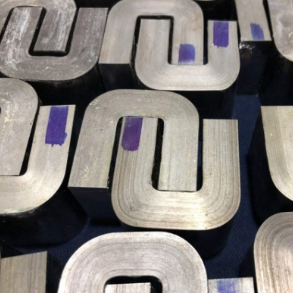
Gnee provides premium iron cores to the world. Our cores can be selected in a wide range of materials, shapes, applications, manufacturing techniques, etc., to meet customers' diverse demands. Explore our wide product range now~



Manufacturing Process

1. Raw Material Sourcing

2. Slitting

3. Punching

4. Laminating

5. Core Forming

6. testing
GNEE EC
Founded in 2008 and located in Anyang in China, Gnee Electric is a high-tech enterprise specializing in researching and manufacturing iron core products.
The company currently occupies over 20,000 square meters and employs more than 200 people, including over 80 professionals. After more than 18 years of development, we have built our own magnetic material production base and independently develope, produce, and sell various kinds of iron cores. The common types include silicon steel cores, motor cores, transformer cores, toroidal iron cores, special-shaped cores, custom cores, and others. Our cores are widely applied in different sectors including transformers, motors, mutual inductors, voltage stabilizers, welding machines, magnetic amplifiers, and instrumentation, providing diverse core solutions to global customers.

30+
Types of Products
18k+
Happy Clients
Why Choose GNEE EC?
GNEE EC was founded in 2008, which is a National High-tech Enterprise & Famous Brand Enterprise in China, developing into a professional manufacturer and supplier of high-quality iron cores.
18+
Over 18 years of success in the iron core industry;
National High-tech Enterprise & Famous Brand Enterprises in China;
200+
Over 200 employees;
The R&D team has more than 80 experienced engineers and the production team has more than 100 skilled staffs;
35+
Annual turnover up to 35 million dollor per year;
Owns many sets of highly automatic winding, annealing, and assembling machines;
1,000+
Over 1000 customers in domestic and overseas markets;
core Products are exported to more than 70 countries in the world;
Gnee Iron Core Factory Overview


Meet Our Sales Manager
"The Core of the Iron Core, the Power of Leadership" - See Our Great Decision-Makers Deeply Engaged in the Magnetic Materials Industry.

Edison Zhang
CEO

Kelly Zhang
General Manager

Alex Cao
Sales Manager
Industries Served

Automobile Industry

New Energy


Transformer Applications

Our Mission
Strive To Create world-class Iron core brand
With 18 Years of industry experience, we focus on the research, development, and manufacturing of high-quality iron cores for electricity, industrial control, new energy, and automotive markets