


Amorphous Ring Core
Oct 14, 2025
Leave a message
Amorphous Ring Core Description
Amorphous ring cores have revolutionized the field of precision engineering, offering exceptional magnetic performance. The unique design of these cores results in improved efficiency, reduced energy loss, and enhanced overall performance. By utilizing amorphous metals, these toroidal cores exhibit superior magnetic properties, making them ideal for a wide range of applications, including power transformers, inductors, and electromagnetic coils.

The Construction of Amorphous Toroidal Cores
Amorphous toroidal cores are meticulously engineered using advanced processes to ensure optimal performance. These cores are composed of a ribbon-like strip made from amorphous metal alloys. The amorphous metal alloys used in their construction contain a mixture of elements, including iron, boron, and silicon. The precise composition of these alloys ensures high magnetic permeability and low coercivity, enabling the cores to efficiently store and transfer magnetic energy.
The ribbon-like strip is carefully wound into a toroidal shape, forming a closed-loop structure. The toroidal shape provides several advantages over other core configurations. First and foremost, it minimizes magnetic flux leakage, allowing for more efficient magnetic coupling. The closed-loop geometry also reduces electric current losses, resulting in lower power consumption and improved overall system efficiency.
The unique construction of amorphous toroidal cores offers excellent thermal stability, making them resistant to high temperatures and ensuring reliable performance even in demanding environments. Furthermore, their compact design allows for efficient space utilization and easy integration into various electronic and electrical devices.
The Advantages of Amorphous Toroidal Cores
Amorphous toroidal cores provide several key advantages compared to traditional magnetic cores. These advantages stem from the exceptional properties of amorphous metals and the unique design of toroidal cores. Let's explore some of these advantages in detail:
1. Enhanced Efficiency
Amorphous toroidal cores offer enhanced efficiency due to their low core loss and excellent magnetic properties. The amorphous metal alloys used in their construction exhibit low hysteresis losses, resulting in reduced energy dissipation during the magnetization process. This reduction in energy loss translates into improved efficiency and reduced operating costs, making them an attractive choice for power electronics applications.
2. Improved Performance
The unique toroidal shape of these cores eliminates air gaps and reduces magnetic flux leakage, resulting in improved magnetic coupling and overall performance. By minimizing losses, amorphous toroidal cores provide higher saturation flux density and better magnetic permeability than traditional magnetic cores. This leads to improved signal integrity, reduced noise interference, and enhanced system reliability.
3. Compact and Lightweight Design
Amorphous toroidal cores exhibit a compact and lightweight design, making them suitable for space-constrained applications. Their closed-loop geometry allows for efficient flux containment within a smaller volume, enabling the development of smaller and more lightweight devices without compromising on performance. This advantage is particularly crucial in industries where miniaturization is a key requirement.
4. Wide Frequency Range
Amorphous toroidal cores exhibit excellent high-frequency characteristics, making them suitable for a wide range of applications requiring precise performance at varying frequencies. Their low magnetic losses and high saturation flux density make them ideal for power electronics, renewable energy systems, telecommunications, and many other industries where reliable operation across a broad frequency spectrum is necessary.
5. Reduced Electromagnetic Interference
The toroidal shape of these cores significantly reduces electromagnetic interference (EMI) by trapping and containing the magnetic flux within the core. This prevents the generation of stray fields that can interfere with neighboring components or sensitive electronic systems. As a result, amorphous toroidal cores are crucial in applications where EMI must be minimized to ensure proper operation and reliable data transmission.
Applications of Amorphous ring Cores
Amorphous toroidal cores find extensive applications across various industries, thanks to their exceptional magnetic performance and unique design. Here are some of the key applications where these cores are widely utilized:
1. Power Transformers
Amorphous toroidal cores are extensively used in power transformers to efficiently step-up or step-down voltages in electrical power distribution systems. Their low core loss, compact design, and excellent thermal stability make them an ideal choice for high-power applications. Additionally, their enhanced efficiency contributes to energy savings and reduced greenhouse gas emissions.
2. Inductors and Chokes
These cores are widely employed in inductors and chokes, which are essential components in various electronic devices, power supplies, and filtering circuits. The high permeability of amorphous toroidal cores allows for efficient energy storage and transfer, resulting in improved inductance and reduced power losses. Their compact design makes them particularly suitable for applications where space is limited.
3. Electromagnetic Coils
Amorphous toroidal cores serve as a vital component in electromagnetic coils used in a wide range of devices such as relays, solenoids, motors, and actuators. The cores' high saturation flux density and low coercivity enable precise control of magnetic fields, ensuring efficient operation and reliable performance of these devices. Their compact size also facilitates the development of compact and lightweight electromagnetic systems.
4. Renewable Energy Systems
Amorphous toroidal cores play a crucial role in renewable energy systems, including solar inverters and wind power generators. Their excellent high-frequency characteristics, reduced energy losses, and reliable performance in varying environmental conditions make them well-suited for efficient power conversion and generation. By utilizing amorphous toroidal cores, renewable energy systems can achieve higher conversion efficiency and improved overall reliability.
5. Telecommunications
The exceptional magnetic properties and wide frequency range of amorphous toroidal cores make them indispensable in telecommunications equipment, including high-speed communication systems and data transmission devices. Their compact design, reduced EMI, and enhanced efficiency contribute to better signal integrity, reduced data loss, and improved overall performance of communication networks.
Conclusion
Amorphous toroidal cores offer precision engineering for optimal magnetic performance. Their meticulous construction, utilizing amorphous metal alloys, ensures exceptional efficiency, reduced energy loss, and improved overall performance. The advantages conferred by the unique toroidal shape and amorphous material properties are crucial in various industries, ranging from power transformers and inductors to renewable energy systems and telecommunications.
The compact design, wide frequency range, and reduced electromagnetic interference make these cores an excellent choice for applications where efficiency, reliability, and miniaturization are essential. As technology continues to advance, it is evident that amorphous toroidal cores will play a pivotal role in shaping the future of precision engineering and magnetic applications.
GNEE Featured Products
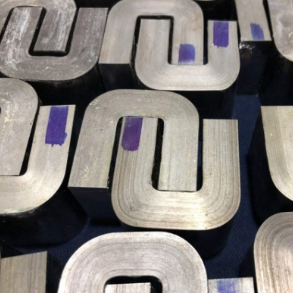
Gnee provides premium iron cores to the world. Our cores can be selected in a wide range of materials, shapes, applications, manufacturing techniques, etc., to meet customers' diverse demands. Explore our wide product range now~



Manufacturing Process

1. Raw Material Sourcing

2. Slitting

3. Punching

4. Laminating

5. Core Forming

6. testing
GNEE EC
Founded in 2008 and located in Anyang in China, Gnee Electric is a high-tech enterprise specializing in researching and manufacturing iron core products.
The company currently occupies over 20,000 square meters and employs more than 200 people, including over 80 professionals. After more than 18 years of development, we have built our own magnetic material production base and independently develope, produce, and sell various kinds of iron cores. The common types include silicon steel cores, motor cores, transformer cores, toroidal iron cores, special-shaped cores, custom cores, and others. Our cores are widely applied in different sectors including transformers, motors, mutual inductors, voltage stabilizers, welding machines, magnetic amplifiers, and instrumentation, providing diverse core solutions to global customers.

30+
Types of Products
18k+
Happy Clients
Why Choose GNEE EC?
GNEE EC was founded in 2008, which is a National High-tech Enterprise & Famous Brand Enterprise in China, developing into a professional manufacturer and supplier of high-quality iron cores.
18+
Over 18 years of success in the iron core industry;
National High-tech Enterprise & Famous Brand Enterprises in China;
200+
Over 200 employees;
The R&D team has more than 80 experienced engineers and the production team has more than 100 skilled staffs;
35+
Annual turnover up to 35 million dollor per year;
Owns many sets of highly automatic winding, annealing, and assembling machines;
1,000+
Over 1000 customers in domestic and overseas markets;
core Products are exported to more than 70 countries in the world;
Gnee Iron Core Factory Overview


Meet Our Sales Manager
"The Core of the Iron Core, the Power of Leadership" - See Our Great Decision-Makers Deeply Engaged in the Magnetic Materials Industry.

Edison Zhang
CEO

Kelly Zhang
General Manager

Alex Cao
Sales Manager
Industries Served

Automobile Industry

New Energy


Transformer Applications

Our Mission
Strive To Create world-class Iron core brand
With 18 Years of industry experience, we focus on the research, development, and manufacturing of high-quality iron cores for electricity, industrial control, new energy, and automotive markets