


Oriented Silicon Steel in High-Frequency Applications
Aug 15, 2023
Leave a message
Oriented silicon steel, while primarily known for its role in improving energy efficiency and reducing losses in low-frequency applications like transformers and motors, can also have a presence in high-frequency applications. While not as common in these applications due to its magnetic properties being optimized for lower frequencies, there are certain scenarios where oriented silicon steel can still offer benefits:
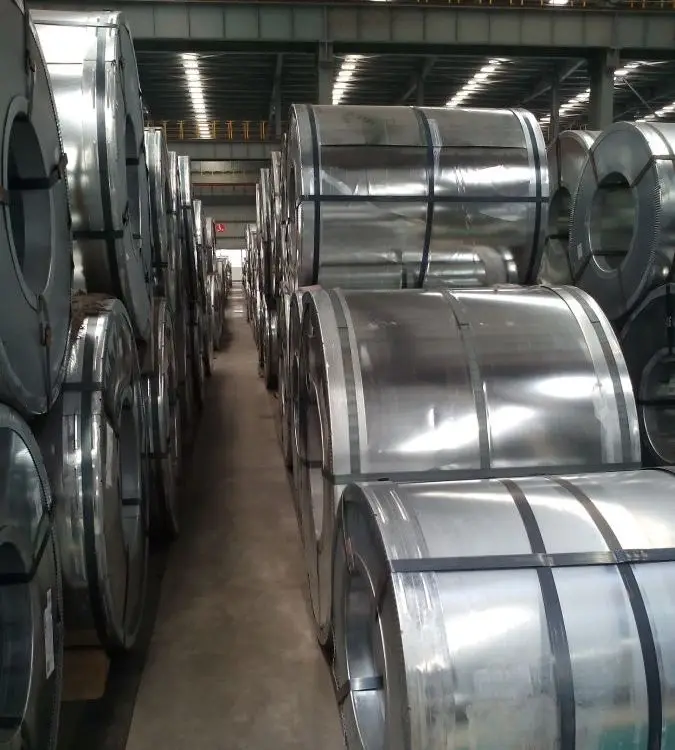
Inductive Components: In high-frequency inductive components such as chokes and inductors, oriented silicon steel cores can contribute to reduced core losses and improved efficiency compared to non-oriented steel. This is particularly relevant when operating in frequencies below the material's typical cutoff frequency.
Resonant Circuits: Oriented silicon steel cores can be used in resonant circuits where high efficiency is desired, especially in applications where the resonance frequency aligns with the material's properties.
Power Electronics: In some high-frequency power electronics applications, where the operating frequency is still within the material's effective range, oriented silicon steel cores can contribute to improved energy conversion efficiency.
Radio Frequency (RF) Devices: In certain RF devices, such as RF transformers or RF inductors operating at frequencies near the material's effective range, oriented silicon steel cores can help minimize losses and enhance performance.
Wireless Charging: In wireless power transfer systems, oriented silicon steel cores might be used in resonant circuits to improve the efficiency of energy transfer.
Microwave Devices: In specific microwave applications, where frequencies might still fall within the usable range for oriented silicon steel, the material's low loss properties could be advantageous.
It's important to note that the primary design consideration for high-frequency applications is that oriented silicon steel's magnetic properties are optimized for lower frequencies. At higher frequencies, core losses can become more significant due to eddy current losses and hysteresis effects. Therefore, in many high-frequency applications, other magnetic materials with better high-frequency characteristics, such as ferrites or certain types of powdered metals, might be preferred over oriented silicon steel.
As technology and material science continue to evolve, there may be further exploration into how oriented silicon steel could be engineered or used in novel ways to enhance its performance in higher-frequency applications. However, for now, while it may have limited usage in high-frequency scenarios, oriented silicon steel is primarily known for its exceptional efficiency in low-frequency applications.