


Manufacturing process of electrical steel
Nov 22, 2023
Leave a message
GNEE Electrical Steel
Manufacturing process of electrical steel
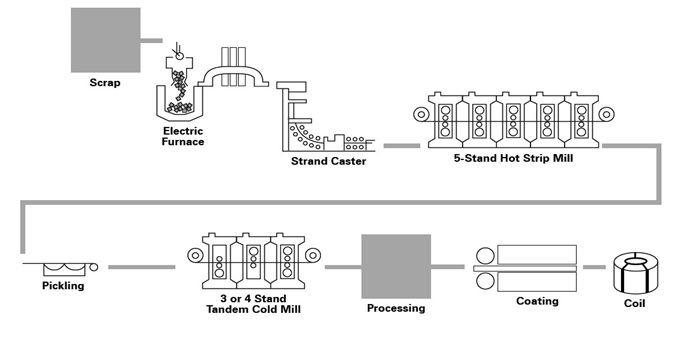
The refining, melting and rolling process of steel is similar to that of carbon steel. However, more careful control is required at every stage of production. The term electrical refers to the application of the steel, not the method used in melting it. Some plants do use electric furnaces to melt these steels, and modern production methods such as continuous casting and argon oxygen decarburization (AOD) help ensure consistent quality.
Electrical steel plates are rolled into thick gauge coils at high temperatures. The coils are then pickled to remove scale. The material is then cold rolled in oil to final specifications and annealed. Grain-oriented electrical steel is cold reduced and undergoes various processing steps that are critical to developing its preferred grain orientation.
Electrical steel steelmaking process
Composition of electrical steel
Flat rolled electrical steel is produced to meet magnetic performance specifications rather than a specific chemical composition. Magnetism is the most important and depends on processing and chemical composition. However, in order to indicate the types of core materials and to illustrate how they are usually classified according to their composition, typical chemical analyzes of some of these materials are listed.
Silicon is the main alloying element in electrical steel. It is added because it increases the volume resistivity of the steel, thereby reducing the eddy current component of core losses. Silicon is more effective in this regard than any other element that can be conveniently added. Silicon has the added benefit of improving core losses to some extent by reducing the lagging component in non-oriented electrical steels as it affects the grain structure of the steel. In addition, a certain level of silicon must be maintained to avoid phase transformation, thereby aiding the crystal orientation process in grain-oriented electrical steel.
Depending on the type of product, other major alloying elements added to electrical steel are aluminum and manganese. Each of these is typically added in amounts less than 1.0%, more commonly between 0.1% and 0.5%. These elements are added primarily for their metallurgical effects rather than for any physical effects such as volume resistivity. They also have a beneficial effect on the grain structure of the steel, thereby helping to reduce the hysteresis component of core losses.
Other elements are present in electrical steel, but are essentially impurities and only remain in residual amounts. Carbon is an element whose content varies from the amount present in the melt to the amount present in the final product. Special heat treatments are carried out during rolling mill processing to reduce the carbon content of the fully processed material to very low values. This carbon removal occurs during customer annealing of semi-machined grades.
In the case of grain-oriented electrical steel, impurities such as sulfur and nitrogen are initially required to help form the final crystal orientation, but these elements are subsequently removed during the final anneal. Because the magnetic quality of electrical steel is a function of chemical analysis and mill processing, there may be some overlap in grades, as shown in Table 2. However, core losses typically vary with silicon content, and increasing silicon increases core loss levels but results in a reduction in high induced permeability.
grain oriented silicon steel
