


Low Eddy Current Loss Properties Of Silicon Steel
Jul 20, 2023
Leave a message
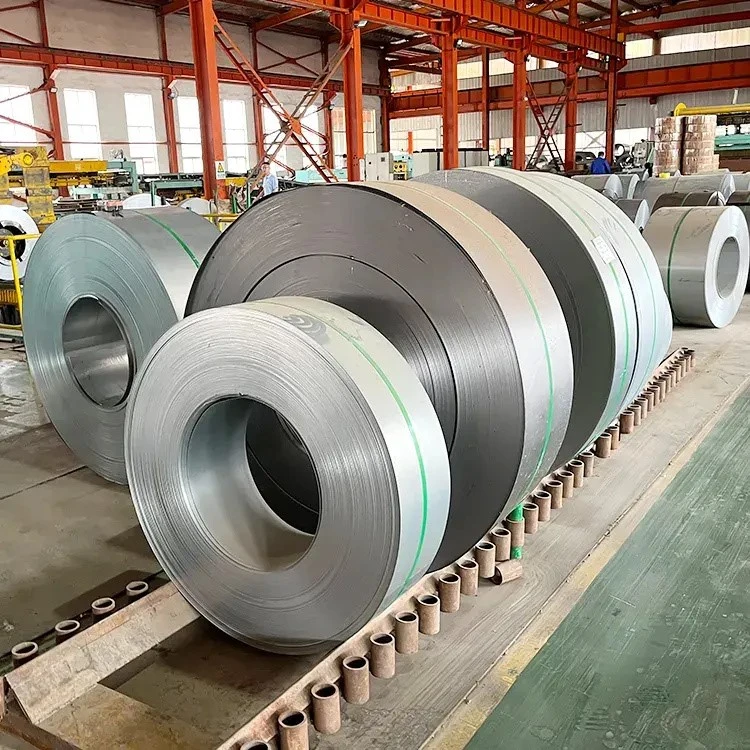
The low eddy current loss of silicon steel is an important characteristic of its low energy loss due to eddy currents generated in an alternating magnetic field. Eddy current losses are the result of circulating currents generated under alternating magnetic fields due to the presence of electrical conductivity in the material. These eddy currents result in energy loss and heat generation, which reduces the efficiency of the equipment.
Silicon steel achieves low eddy current losses in several ways:
Sheet design: Silicon steels are often manufactured in sheet form, reducing the path length of eddy current circulations and thus reducing eddy current losses.
High Resistivity: Silicon steel has a high resistivity, which results in lower eddy current in alternating magnetic fields, thus reducing eddy current losses.
Surface Coatings: Silicon steels may have surface coatings or platings that are effective in suppressing eddy current generation.
Grain guidance and orientation: Silicon steels have special heat treatment processes to achieve grain guidance and orientation, which can help to reduce the path of eddy current circulations and thus reduce eddy current losses.
Optimised alloy formulations: Alloy formulations of silicon steels can be optimised to improve their electrical conductivity and reduce eddy current losses.
High Curie Temperature: Silicon steels typically have a high Curie temperature, which means that at normal operating temperatures, they maintain stable magnetic properties, thereby reducing eddy current losses.
The low eddy current losses that can be achieved with silicon steel through these measures make it an ideal material for the manufacture of high-efficiency, low-energy power equipment and electric motors. The use of low eddy current silicon steel in electrical equipment such as transformers, motors and generators can significantly improve the efficiency of the equipment and reduce energy losses.