


Development History Of Electrical Steel
Nov 13, 2023
Leave a message
development path
Non-oriented electrical steel
As the name suggests, non-oriented electrical steel has the characteristics of magnetic isotropy (also known as isotropic electrical steel) and is widely used in the manufacture of various electric motors and electronic transformer cores. In China, the consumption of non-oriented electrical steel accounts for about 90% of the total consumption of electrical steel.
Important milestones in the development of non-oriented electrical steel:
Between 1882 and 1900, British expert R. A. Hadfield discovered through his research that if a certain amount of silicon is added to steel, iron loss can be greatly reduced;
In 1903, the United States and Germany began to produce hot-rolled silicon steel sheets, starting the commercial production process of silicon steel;
In the early 1940s, the production of cold-rolled non-oriented silicon steel began;
In 1954, Taiyuan Iron and Steel (Group) Co., Ltd. (TISCO) began to produce hot-rolled silicon steel and began to produce silicon steel in China;
In the 1980s, all countries except China stopped producing hot-rolled silicon steel;
In 1979, Wuhan Iron and Steel introduced technology from Japan's Nippon Steel Corporation and began producing cold-rolled non-oriented silicon steel, pioneering the production of cold-rolled silicon steel in China;
In 2000, Baosteel introduced technology from Japan's Kawasaki Heavy Industries Co., Ltd. (now referred to as JFE) and began to produce medium and low-grade cold-rolled silicon steel;
In 2008, Baosteel independently developed the technology and equipment to produce high-grade, high-efficiency non-oriented silicon steel, becoming the first manufacturing company in the world to achieve comprehensive product improvement in the shortest time.
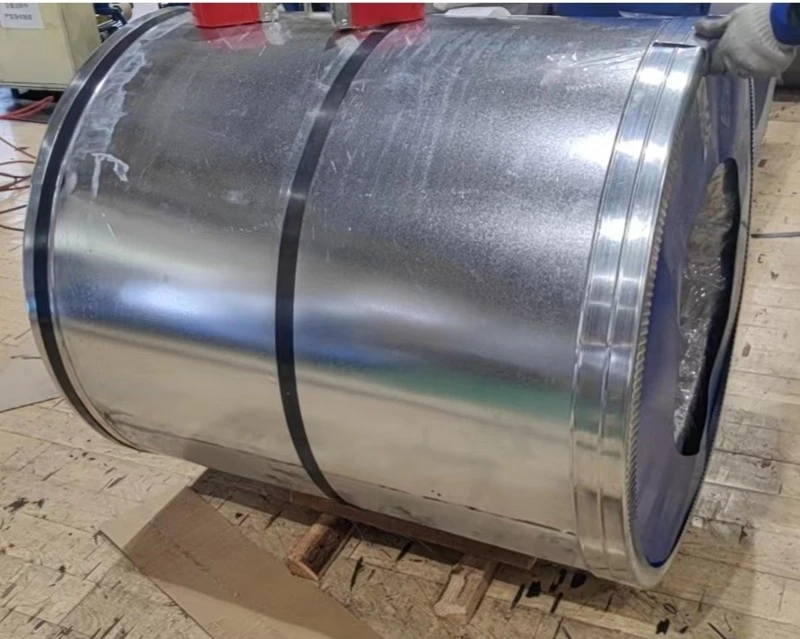
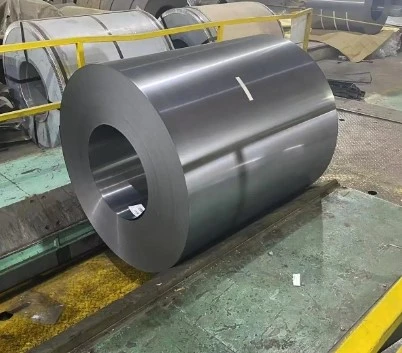
Grain-oriented flat rolled electrical steel
Grain-oriented silicon steel is an electrical steel whose easy magnetization direction is parallel to the rolling direction and has a silicon content of about 3%. Grain-oriented silicon steel can be divided into two categories: ordinary grain-oriented silicon steel and high magnetic induction grain-oriented silicon steel. It is mostly used in the field of power transmission (such as transformers) and is an important functional metal material in the power, electronics, military and other industries.
Grain-oriented silicon steel has long been hailed as a work of art in steel, with its complex and complex technology. Whether they have mastered the technology of producing grain-oriented silicon steel has always been an indicator of the technical capabilities of steel production companies. Before 2000, in China, only Wuhan Iron and Steel Co., Ltd. had the mass production capacity of cold-rolled grain-oriented silicon steel with an annual production capacity of about 100,000 tons, which could only meet 30% of the domestic market demand. The remaining shortfall depends mainly on imports. As a result, the development of the power industry has been restricted. With the development of low-carbon economy and rising energy costs, ultra-high voltage, large capacity, low loss, and smart transmission have become a world trend. Therefore, China's transformer industry urgently needs high-grade grain-oriented silicon steel. Since the technology for manufacturing advanced grain-oriented silicon steel is owned by only a few companies, they consider the technology to be strictly confidential and refuse to transfer it. The Chinese people must break through this technological blockade through independent research and development.
As early as 1997, Baosteel preliminarily understood the manufacturing process characteristics of the three categories of oriented silicon steel (high, medium and low temperature) through pre-research on oriented silicon steel in its own laboratory, explored the feasibility of the technical route, and trial-produced qualified of laboratory samples. On this basis, Baosteel began to hire key internal R&D personnel to develop large-scale low-temperature and high-magnetic induction grain-oriented silicon steel. Taking breakthroughs in laboratory equipment and technology as well as system testing technology as the starting point, Baosteel has successfully developed key technologies for manufacturing low-temperature and high-magnetic induction grain-oriented silicon steel. After that, Baosteel began to build a grain-oriented silicon steel production line.
The construction of Baosteel's grain-oriented silicon steel production line is divided into three stages. Up to now, its grain-oriented silicon steel production capacity has reached 200,000 tons. By 2014, its annual production capacity of grain-oriented silicon steel will reach 300,000 tons.