


How to Install a 150 kVA Oil-immersed Power Transformer for Safe Long-Term Operation?
Jan 30, 2026
Leave a message
The correct installation of a 150 kVA oil-immersed power transformer is as critical as its design and manufacturing. A proper installation ensures operational safety, maximizes efficiency, and lays the foundation for decades of reliable service. This process requires meticulous planning, adherence to standards, and precise execution.
Whether you are an electrical contractor, a project engineer, or a facility manager, this comprehensive guide outlines the essential steps and best practices for installing your transformer correctly, safeguarding both personnel and your significant capital investment from the very first day.
Who We Are: Your Partner from Factory to Foundation
GNEE is not just a manufacturer; we are your technical partner throughout the transformer's lifecycle. We provide detailed installation manuals, dimensional drawings, and accessible technical support for every 150 kVA oil-immersed power transformer we supply.
Our goal is to ensure that our expertly engineered product delivers its full potential through an equally expert installation, leading to a seamless and safe commissioning process.
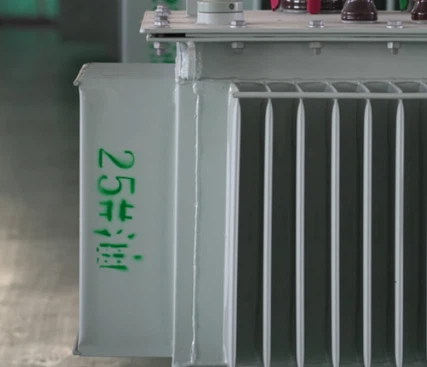
150 kVA oil-immersed power transformer
Phase 1: Pre-Installation Site Preparation and Foundation Work
A successful installation begins long before the transformer arrives on site. Proper preparation is paramount.
- Site Selection & Clearances: Choose a level, well-drained outdoor location. Maintain all minimum safety clearances as per IEC/IEEE standards and local codes for ventilation, fire safety, and maintenance access. Ensure the area is free from flooding risk and away from corrosive fumes.
- Foundation & Plinth: Construct a robust, level concrete plinth strong enough to support the transformer's weight (transformer + oil). The plinth should be slightly larger than the transformer base and include provisions for anchoring bolts. It must incorporate an oil containment bund wall (if required by local regulations) with a capacity equal to 110% of the total oil volume.
- Cable Trench Preparation: Prepare trenches for incoming HV and outgoing LV cables, ensuring proper bending radii and separation as per standards.
Receiving, Handling, and Positioning the Transformer
Careful handling prevents internal damage that may not be immediately visible.
- Receiving Inspection: Upon delivery, perform a visual inspection for any shipping damage. Check the oil level gauge and pressure/vacuum gauge (if fitted). Verify the integrity of seals and bushings.
- Lifting and Moving: Always lift the transformer using the designated lifting lugs or hooks provided on the tank. Never lift by the bushings, radiators, or gauges. Use spreader bars to avoid damaging the tank. Move the transformer slowly and smoothly to its final position on the plinth.
- Anchoring: Once correctly positioned, secure the transformer to the plinth using the base mounting holes and appropriate anchor bolts. This prevents movement from seismic activity or fault forces.
For critical projects, inquire about our supervised installation and commissioning services.
Phase 3: Electrical Connections and Earthing (Grounding)
This phase requires qualified high-voltage electricians.
- De-energize and Isolate: Ensure the upstream HV supply is completely isolated, locked out, and tagged out (LOTO) before any work begins.
- Bushing and Connection Preparation: Clean HV and LV bushings. Inspect cable terminations. Apply suitable contact compound to connection surfaces if recommended.
- Making Connections: Connect the HV and LV cables to their respective bushings. Tighten all connections to the manufacturer's specified torque values using a calibrated torque wrench. Overtightening or undertightening can lead to failures.
- Critical Earthing: Connect the transformer's main earth (grounding) terminal to the site's earth mat/electrode system using a conductor of adequate size. This is a vital safety step to protect against electric shock and ensure proper operation of protection devices.
Phase 4: Final Checks, Oil Handling, and Pre-Commissioning Tests
Before energization, a series of verifications is mandatory.
Oil Level and Sampling: Confirm the oil level is correct as indicated on the temperature-corrected gauge. Take an oil sample for laboratory tests (Dielectric Strength, Moisture Content, DGA) to establish a baseline for future comparison.
Control and Protection Wiring: Connect wiring for protection devices (Buchholz relay, pressure relief device, winding temperature indicator) to the control cabinet or alarm panel.
Pre-Energization Tests: Conduct essential electrical tests:
- Insulation Resistance Test (Megger test) on HV and LV windings.
- Turns Ratio Test (TTR) to verify voltage ratios.
- Winding Resistance Test to check for loose connections.
Verify the correct operation of all protective relays and alarms.
Phase 5: Initial Energization and Load Monitoring
The final step must be performed with extreme caution and under supervision.
- Final Visual Inspection: Do a last walk-around to ensure all tools are removed, covers are replaced, and the area is clear.
- Energization Protocol: Initially energize the transformer with no load connected. Allow it to remain energized for at least 24 hours while monitoring for unusual sounds, oil leaks, or temperature rises.
- Applying Load: Gradually apply load in stages if possible. Monitor oil temperature, winding temperature (if equipped), and sound levels closely during the first days of operation under load.
GNEE 150 kVA Oil-Immersed Transformer: Installation-Critical Parameters
| Parameter / Consideration | GNEE Specification / Guideline |
|---|---|
| Weight (Transformer + Oil) | Approximately [e.g., 1200 kg] |
| Overall Dimensions (LxWxH) | [e.g., 1600x1000x1200 mm] |
| Bushing Details (HV/LV) | [e.g., 11kV Porcelain / 400V Composite] |
| Earthing Terminal | Two designated main earth pads on tank. |
| Lifting Lugs | Four rated lifting lugs integrated into tank. |
| Oil Volume / Type | [e.g., 300 Liters] / Mineral Oil to IEC 60296 |
| Cooling Type | ONAN (Oil Natural Air Natural) |
| Protection Devices | Buchholz Relay, Pressure Relief Device, WTI. |
| Minimum Electrical Clearances | As per IEC 60076-1 & Local Code. |
| Recommended Anchor Bolt Spec | [e.g., M16, Grade 8.8] |
Conclusion: A Flawless Installation is the First Step to Decades of Service
Properly installing your 150 kVA oil-immersed power transformer is a systematic process that demands expertise and attention to detail. By following these phases-from site preparation to gradual energization-you secure the transformer's performance, safety, and lifespan.
For complete peace of mind, partner with GNEE from the start. Contact us today to access detailed installation documentation, discuss your project specifics, or inquire about our professional installation supervision services for your 150 kVA transformer.