

What is the relationship between silicon steel sheet and electromagnetic shielding?
Oct 13, 2025
Leave a message
Hey there! As a supplier of silicon steel sheets, I've been getting a lot of questions lately about the relationship between silicon steel sheets and electromagnetic shielding. So, I thought I'd take a few minutes to break it down for you.
First off, let's talk about what silicon steel sheets are. Silicon steel, also known as electrical steel, is a special type of steel that contains silicon. The addition of silicon helps to reduce the core loss in electrical equipment, making it more energy - efficient. These sheets are widely used in transformers, motors, and generators because of their excellent magnetic properties.
Now, what about electromagnetic shielding? Electromagnetic shielding is the process of reducing the electromagnetic field in a space by blocking it with a conductive material. It's crucial in many applications, especially in electronics where electromagnetic interference (EMI) can cause malfunctions.
So, how do silicon steel sheets fit into the picture of electromagnetic shielding? Well, silicon steel has high magnetic permeability. Magnetic permeability is a measure of how easily a magnetic field can pass through a material. When a magnetic field encounters a silicon steel sheet, the sheet can attract and conduct the magnetic field lines. This property allows silicon steel sheets to redirect and contain magnetic fields, which is the basic principle of electromagnetic shielding.
In practical applications, silicon steel sheets are often used to shield sensitive electronic components from external magnetic fields. For example, in a transformer, the silicon steel core not only helps in the efficient transfer of electrical energy but also acts as a shield to prevent the leakage of the magnetic field. This is important because a leaking magnetic field can interfere with other nearby electronic devices.
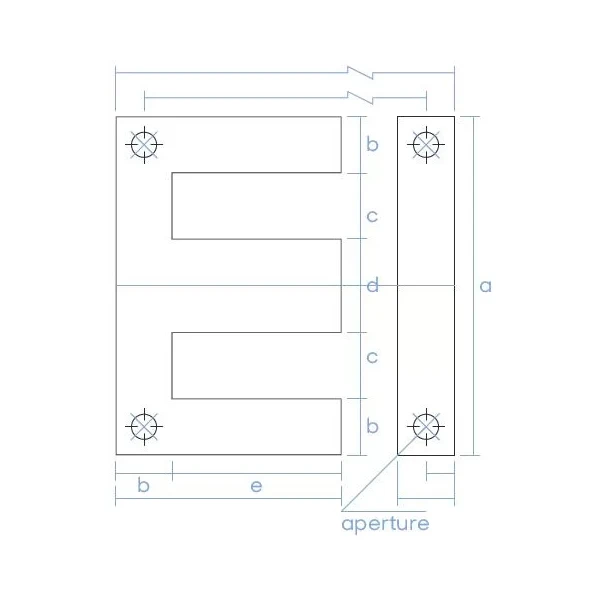
Let's look at some of the products we offer at our company. We have the EI Core High - speed Punch Lamination. These laminations are made from high - quality silicon steel and are designed for high - speed punching processes. They are ideal for applications where precise electromagnetic shielding and energy efficiency are required. The unique design of these laminations allows for better magnetic field control, which is essential for effective electromagnetic shielding.
Another great product is the Silicon Electrical Steel Sheet Used Of Ei96 Transformers. These sheets are specifically tailored for Ei96 transformers. They have excellent magnetic properties that enable them to shield the transformer from external magnetic interference. This not only improves the performance of the transformer but also extends its lifespan.
We also offer the Transformer Core 23RK085 27RK095. These transformer cores are made from high - grade silicon steel. They are designed to provide optimal electromagnetic shielding for transformers. The high magnetic permeability of the silicon steel used in these cores helps to contain the magnetic field within the transformer, preventing it from affecting other components in the vicinity.
One of the advantages of using silicon steel sheets for electromagnetic shielding is their cost - effectiveness. Compared to some other shielding materials, silicon steel is relatively inexpensive. It also has good mechanical properties, which means it can be easily fabricated into different shapes and sizes according to the specific requirements of the application.
However, it's important to note that the effectiveness of silicon steel sheets for electromagnetic shielding depends on several factors. The thickness of the sheet is one of the key factors. Generally, thicker sheets provide better shielding because they can accommodate more magnetic field lines. The quality of the silicon steel also matters. High - quality silicon steel with low core loss and high magnetic permeability will offer better shielding performance.
In addition, the frequency of the electromagnetic field also plays a role. Silicon steel sheets are more effective for low - frequency magnetic fields. For high - frequency electromagnetic fields, other materials may be more suitable. But for most common electrical applications where low - frequency magnetic fields are dominant, silicon steel sheets are a great choice.
If you're in the market for silicon steel sheets for electromagnetic shielding applications, we're here to help. Our team of experts can provide you with detailed information about the products and help you choose the right one for your specific needs. Whether you're working on a small - scale electronics project or a large - scale industrial application, we have the silicon steel sheets that can meet your requirements.
We understand that every customer has unique needs, and we're committed to providing personalized solutions. We can offer custom - made silicon steel sheets based on your specifications. This means you can get the exact electromagnetic shielding performance you need for your project.

If you're interested in learning more about our products or have any questions about the relationship between silicon steel sheets and electromagnetic shielding, don't hesitate to get in touch. We're always happy to have a chat and discuss how our silicon steel sheets can benefit your business. Whether you're a manufacturer, an engineer, or someone just looking for a reliable source of silicon steel sheets, we're here to assist you.
In conclusion, silicon steel sheets are an important part of electromagnetic shielding technology. Their high magnetic permeability, cost - effectiveness, and good mechanical properties make them a popular choice for a wide range of applications. So, if you're looking for a reliable solution for electromagnetic shielding, consider using our high - quality silicon steel sheets.
References
- "Electrical Steel: Properties and Applications" - A technical guide on the properties and uses of silicon steel.
- "Handbook of Electromagnetic Shielding" - A comprehensive resource on electromagnetic shielding principles and materials.