

What are the differences between Silicon Steel C Core and iron powder cores?
Jun 02, 2025
Leave a message
In the field of electrical engineering, the choice of magnetic cores is crucial for the performance of various electrical devices. Two commonly used types of magnetic cores are Silicon Steel C Cores and iron powder cores. As a supplier of Silicon Steel C Cores, I have in - depth knowledge of these two types of cores and their differences. In this blog, I will elaborate on the disparities between them from multiple aspects, including material composition, magnetic properties, applications, and manufacturing processes.
Material Composition
Silicon Steel C Cores are mainly made of silicon steel, which is an alloy composed of iron and silicon. The silicon content typically ranges from 0.5% to 4.5%. The addition of silicon to iron can significantly reduce the core's eddy - current losses. Silicon increases the electrical resistivity of the steel, thereby minimizing the flow of eddy currents induced in the core when it is exposed to an alternating magnetic field. This property makes silicon steel an excellent choice for applications where energy efficiency is a priority.
On the other hand, iron powder cores are made by compressing fine iron powder particles together. These particles are usually coated with an insulating material to reduce eddy - current losses. The base material is pure iron, but the insulating coating and the way the particles are compacted play a vital role in determining the core's overall properties. The insulating coating helps to isolate each iron particle from its neighbors, preventing the formation of large - scale eddy currents.
Magnetic Properties
Saturation Flux Density
Silicon Steel C Cores generally have a relatively high saturation flux density. The saturation flux density is the maximum magnetic flux density that a core material can withstand before it starts to lose its magnetic properties. High - quality silicon steel can have a saturation flux density of around 1.8 - 2.0 Tesla. This means that Silicon Steel C Cores can handle large amounts of magnetic flux without saturating easily. As a result, they are suitable for high - power applications where large magnetic fields need to be generated, such as in power transformers.
Iron powder cores, in contrast, have a lower saturation flux density, typically in the range of 0.5 - 1.0 Tesla. This lower saturation point limits their use in high - power applications. However, their lower saturation flux density can be an advantage in some cases, such as in applications where the magnetic field needs to be controlled more precisely, and saturation needs to occur at a relatively low level.
Permeability
Permeability is a measure of how easily a magnetic field can pass through a material. Silicon Steel C Cores have a high initial permeability, which means that they can quickly respond to changes in the magnetic field. This property makes them ideal for applications where the magnetic field is changing rapidly, such as in high - frequency transformers. The high permeability also allows for efficient energy transfer between the primary and secondary windings of a transformer.
Iron powder cores have a lower and more stable permeability compared to silicon steel cores. Their permeability is less affected by changes in the magnetic field strength and temperature. This stability makes them suitable for applications where a consistent magnetic performance is required over a wide range of operating conditions, such as in electromagnetic interference (EMI) filters.
Core Losses
Core losses are an important consideration in any magnetic core application. Core losses consist of hysteresis losses and eddy - current losses. Silicon Steel C Cores have relatively low hysteresis losses due to their well - defined crystal structure. The addition of silicon further reduces eddy - current losses. As a result, Silicon Steel C Cores are highly energy - efficient, especially in low - to - medium - frequency applications.
Iron powder cores also have low eddy - current losses because of the insulating coating on the iron particles. However, their hysteresis losses can be relatively high, especially at high frequencies. This limits their efficiency in high - frequency applications compared to Silicon Steel C Cores.
Applications
Power Transformers
Silicon Steel C Cores are widely used in power transformers. Their high saturation flux density and low core losses make them suitable for stepping up or stepping down voltage levels in power distribution systems. The Transformer CRGO Core is a type of high - quality silicon steel core that is commonly used in power transformers. It offers excellent magnetic properties and high energy efficiency, ensuring reliable power transmission.
Iron powder cores are not typically used in large - scale power transformers due to their lower saturation flux density. However, they can be found in some small - scale power transformers, especially those that require a more stable magnetic performance and can tolerate the lower power - handling capacity.
Inductors
In inductor applications, both types of cores have their uses. Silicon Steel C Cores are used in high - power inductors where high inductance values and low losses are required. They can handle large currents without saturating easily, making them suitable for power electronics circuits, such as in switching power supplies.
Iron powder cores are commonly used in EMI filters and RF inductors. Their stable permeability and low eddy - current losses make them ideal for filtering out unwanted electromagnetic interference. They can also be used in RF circuits where a consistent inductance value is needed over a wide frequency range.
High - Frequency Transformers
Silicon Steel C Cores are well - suited for high - frequency transformers, especially those operating in the low - to - medium - frequency range. Their high initial permeability allows for efficient energy transfer at these frequencies. The Silicon Steel Toroidal Core is a type of silicon steel core that is often used in high - frequency transformers. Its toroidal shape provides a more uniform magnetic field, reducing electromagnetic interference.

Iron powder cores are less commonly used in high - frequency transformers compared to silicon steel cores. Their relatively high hysteresis losses at high frequencies limit their performance in these applications. However, they can be used in some specialized high - frequency applications where their unique magnetic properties are required.
Manufacturing Processes
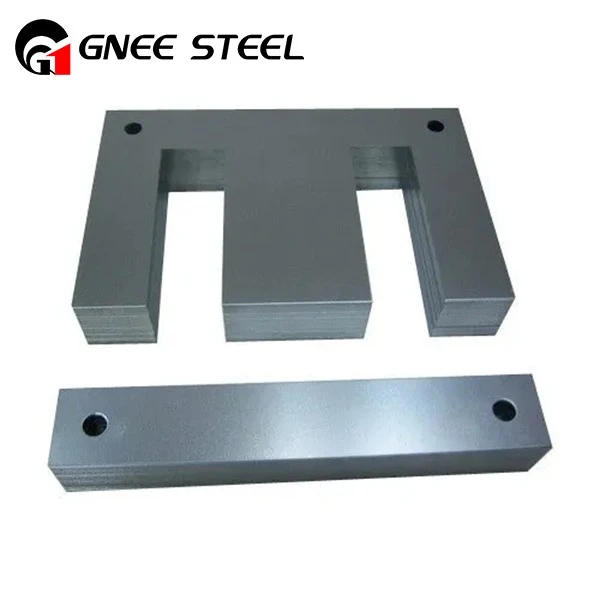
The manufacturing process of Silicon Steel C Cores involves several steps. First, the silicon steel is rolled into thin sheets to reduce eddy - current losses. These sheets are then cut into the appropriate shape, usually in the form of a C. The cut sheets are stacked together and insulated to form the final core. The quality of the silicon steel and the precision of the cutting and stacking processes are crucial for the core's performance. The Grain Oriented Electrical Steel For Transformer Core is a special type of silicon steel that is carefully processed to have a preferred grain orientation, which further improves its magnetic properties.
Iron powder cores are manufactured by mixing the iron powder with an insulating binder and then compressing the mixture into the desired shape under high pressure. The compaction process needs to be carefully controlled to ensure that the iron particles are evenly distributed and that the insulating coating remains intact. After compaction, the cores are usually heat - treated to improve their mechanical and magnetic properties.
Cost Considerations
Silicon Steel C Cores can be relatively expensive, especially high - quality grades. The cost is mainly due to the raw material (silicon steel) and the complex manufacturing process. However, their high energy efficiency and long - term reliability can offset the initial cost, especially in large - scale applications.
Iron powder cores are generally less expensive than Silicon Steel C Cores. The raw material (iron powder) is more readily available, and the manufacturing process is relatively simpler. This makes them a cost - effective choice for applications where cost is a major concern and the performance requirements are not as stringent.
Conclusion
In summary, Silicon Steel C Cores and iron powder cores have significant differences in terms of material composition, magnetic properties, applications, manufacturing processes, and cost. Silicon Steel C Cores offer high saturation flux density, high initial permeability, and low core losses, making them suitable for high - power and low - to - medium - frequency applications such as power transformers and high - frequency inductors. Iron powder cores, on the other hand, have lower saturation flux density, more stable permeability, and are cost - effective, making them ideal for applications where a stable magnetic performance is required, such as in EMI filters.
As a supplier of Silicon Steel C Cores, I understand the importance of choosing the right core for your specific application. If you are in the process of selecting a magnetic core for your electrical device, I encourage you to contact me for more information and to discuss your requirements. I can provide you with high - quality Silicon Steel C Cores that meet your performance and cost needs.
References
- Grover, F. W. (1946). Inductance Calculations: Working Formulas and Tables. Dover Publications.
- Zangari, G. (2016). Handbook of Magnetic Materials. Elsevier.
- Snelling, E. C. (1988). Soft Ferrites: Properties and Applications. Butterworth - Heinemann.